
Detailed Guide to Facial Hair Removal Methods
Your Path to Smooth, Hair-Free Skin
Facial hair removal is a common grooming concern. Whether you're dealing with peach fuzz, upper lip hair, or coarse chin growth, the good news is that you have plenty of options.
Quick Answer: Best Facial Hair Removal Methods
| Method | Duration | Best For | Pain Level |
|---|---|---|---|
| Shaving | 1-2 days | Quick results, large areas | None |
| Waxing | 2-4 weeks | Root removal, longer results | Moderate |
| Threading | Up to 6 weeks | Precision work, eyebrows | Mild |
| Laser | Permanent reduction | Long-term solution | Mild |
| Electrolysis | Permanent removal | All hair types | Moderate |
Facial hair is completely normal, and the decision to remove it is personal. There's no right or wrong answer—it's about what makes you feel your best.
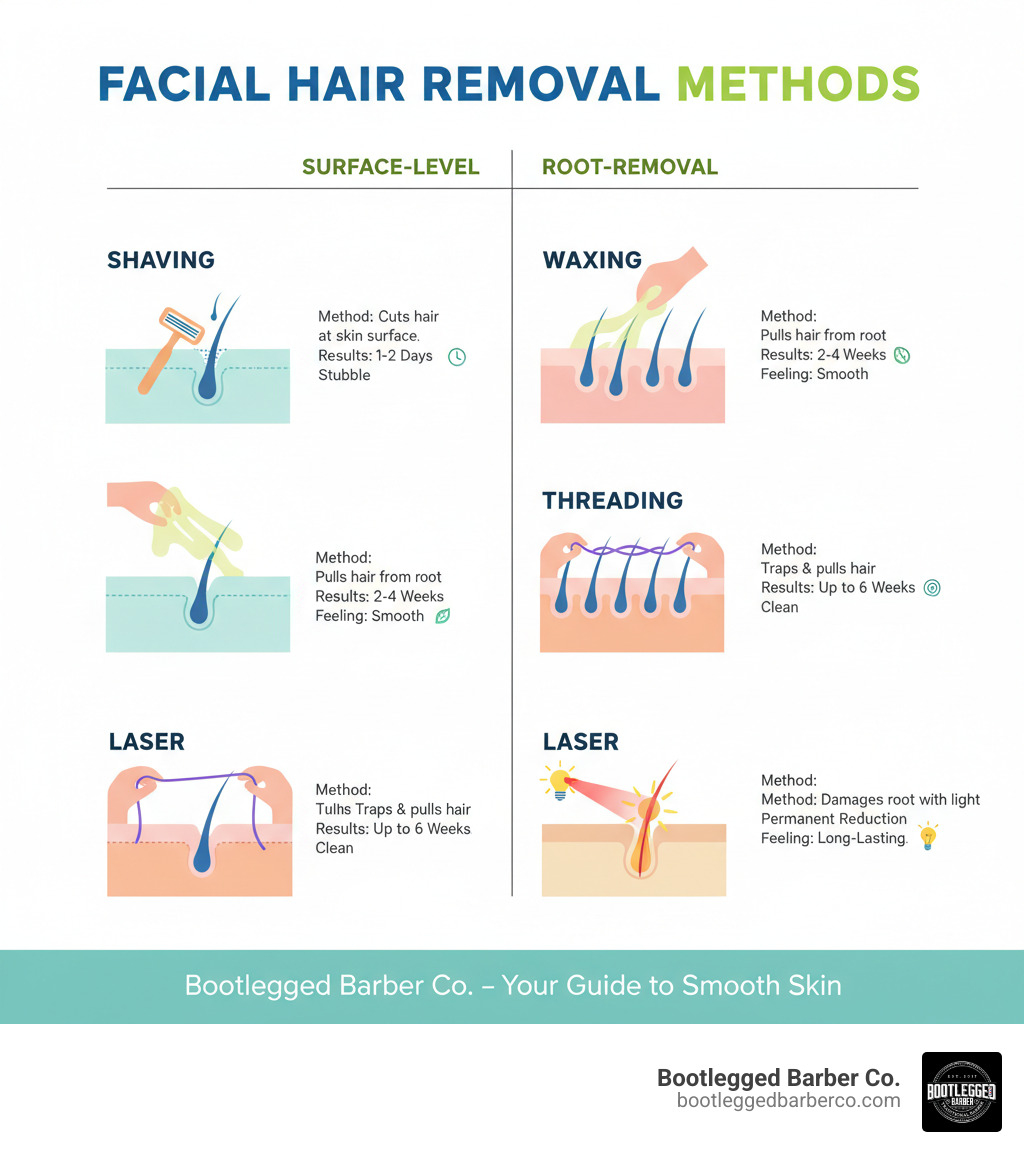
What matters is finding a method that suits your skin type, pain tolerance, budget, and lifestyle. Options range from surface-level (shaving) to root removal (waxing), and from temporary at-home solutions to long-lasting professional treatments.
Safety should always come first. Your facial skin is more delicate than the rest of your body, and the wrong method—or improper technique—can lead to irritation, breakouts, or scarring.
I'm Connor Stone from Bootlegged Barber Co. I've seen how the right grooming techniques can boost confidence. We help our clients steer their options to find solutions that fit their needs.
At-Home Methods: Convenience and Control
At-home facial hair removal offers control, convenience, and cost savings. You can manage unwanted hair on your schedule, in private, and get immediate results without an appointment. The key is understanding what each method does, how long results last, and how to keep your skin healthy.
Shaving
Shaving is the most straightforward option, cutting hair at the skin's surface for an instantly smooth feeling. It's painless, fast, and affordable. As aesthetic nurse practitioner Melanie Abeyta notes, "Shaving is the most effective method for removing hair, with the least side effects, which is great if you have sensitive skin." The main downside is rapid regrowth (1-2 days), which can feel coarse due to the blunt tip created by the blade. Myth buster: shaving does not make hair grow back thicker or darker. You also risk nicks and razor burn.
For a safer shave, dermatologists advise wetting the skin, using shaving cream, shaving with the grain, and rinsing the blade often. Replace blades after 5-7 shaves and store your razor in a dry place. An electric razor may be better for acne-prone skin. For more guidance, check out these tips for a clean shave from dermatologists.
Waxing vs. Sugaring
These methods pull hair from the root for longer-lasting smoothness. They've been used for ages and deliver results that far outlast shaving.

Waxing uses warm wax that is spread on the skin and quickly removed, pulling hair from the follicle. Hard wax is often less irritating because it adheres to the hair more than the skin.
Sugaring uses a natural paste of sugar, lemon, and water. It's applied against hair growth and flicked off in the direction of growth, which is gentler on the skin and causes less hair breakage.
With waxing, you get 2-4 weeks of smoothness, while sugaring can last up to 6 weeks. Over time, hair may grow back finer. The downside is pain. Redness, irritation, and ingrown hairs are also possible. A key safety tip: avoid waxing if you use products like Retin-A, as they thin the skin. Proper at-home technique is crucial to prevent injury. For professional precision and safety, learn more on professional waxing services.
Dermaplaning
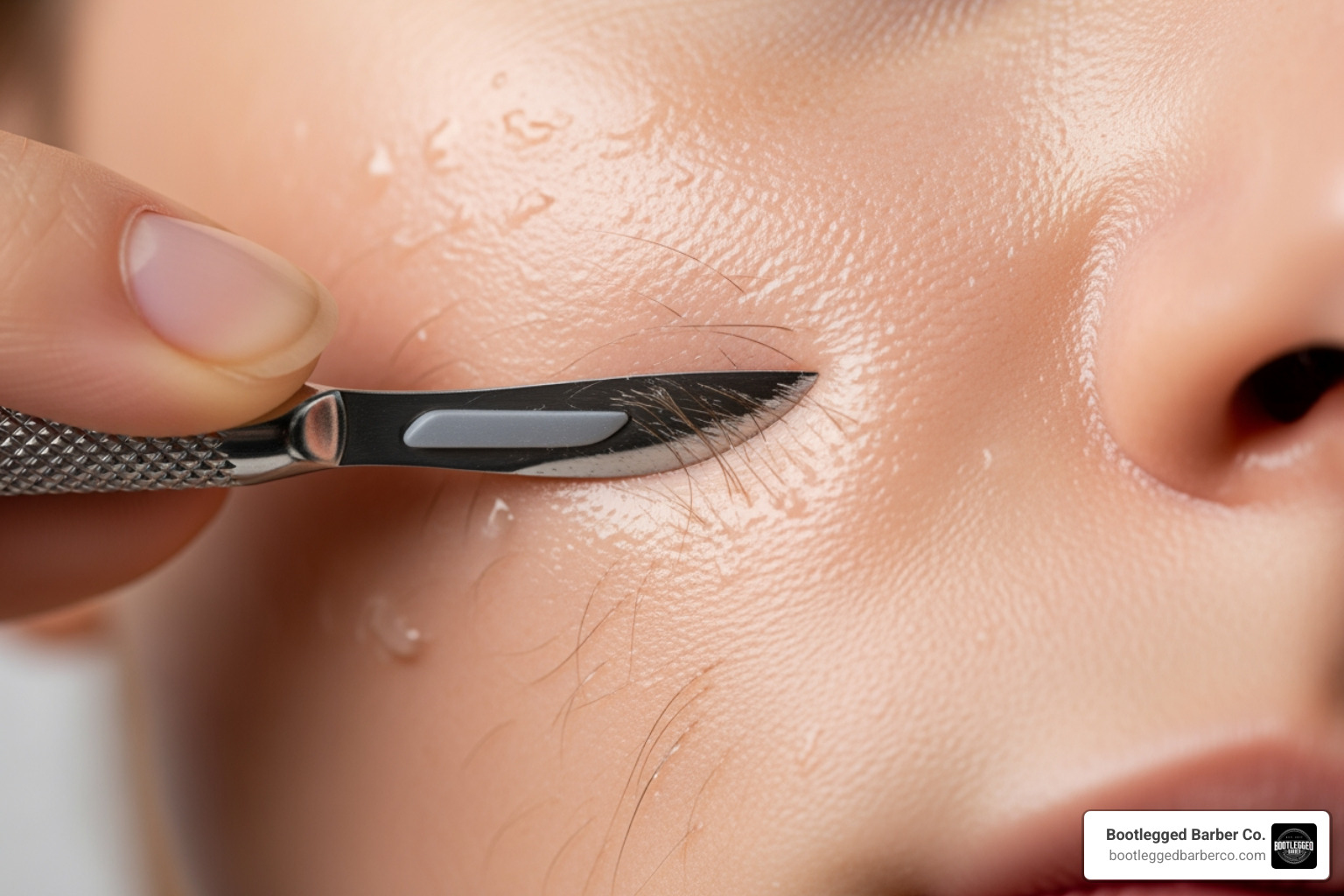
Dermaplaning is a popular dual-action method for facial hair removal and exfoliation. It involves using a sharp blade to gently scrape away dead skin cells and fine vellus hair ("peach fuzz"). The result is instantly smooth, glowing skin that allows for flawless makeup application and better skincare absorption. Makeup artist Shreni Patel recommends it for creating a "better canvas for not only makeup but better skin care absorption."
Results last about two weeks. While at-home tools are accessible, improper technique can cause nicks or irritation. As Jodi Logerfo, DNP, describes it, dermaplaning is "the use of a single-blade razor on dry skin... to exfoliate, getting rid of the top layer of dead skin cells and those pesky, fine vellus hairs." For more details, you can read about what is dermaplaning.
Epilators and Depilatory Creams
These methods offer different approaches for areas like the upper lip and chin.
Epilators are electrical devices with multiple tiny tweezers that pull hairs from the root. Results can last up to 4 weeks, and they can grab very short hairs. The catch is that epilation can be quite painful, especially at first. However, some with sensitive skin find it gentler than waxing because it doesn't remove the top layer of skin cells.
Depilatory creams use chemicals to dissolve hair just below the skin's surface. They are painless and work in 3-10 minutes, but hair grows back within a week or two. The chemicals can be harsh, potentially causing irritation or burns. Always patch-test 24 hours beforehand, never exceed the recommended time, and choose a formula made specifically for the face.
Professional and Long-Term Facial Hair Removal
When at-home methods aren't enough, professional facial hair removal treatments offer longer-lasting or even permanent results. They typically cost more upfront but save you from constant upkeep. When it comes to your face, expertise matters. For a deeper look at what professional treatments can offer, check out Information on professional services.
Threading
Threading is an ancient technique from India, prized for its precision in facial hair removal, especially for shaping eyebrows. The process requires serious skill: a technician twists a thin cotton thread and glides it across the skin, catching and pulling hairs from the root in a precise line.
Because it uses no chemicals, threading is a great option for skin that reacts poorly to wax. Results are clean, defined, and can last up to six weeks. The downside is that it can be painful, particularly for newcomers. A skilled practitioner is essential to avoid irritation or broken hairs.
Laser Hair Removal
Laser hair removal is a popular professional treatment for long-term results. The FDA approves it for permanent hair reduction. The laser emits a concentrated light that is absorbed by the hair's pigment, creating heat that damages the follicle and slows future growth. It only works on actively growing hair, so multiple sessions are necessary.
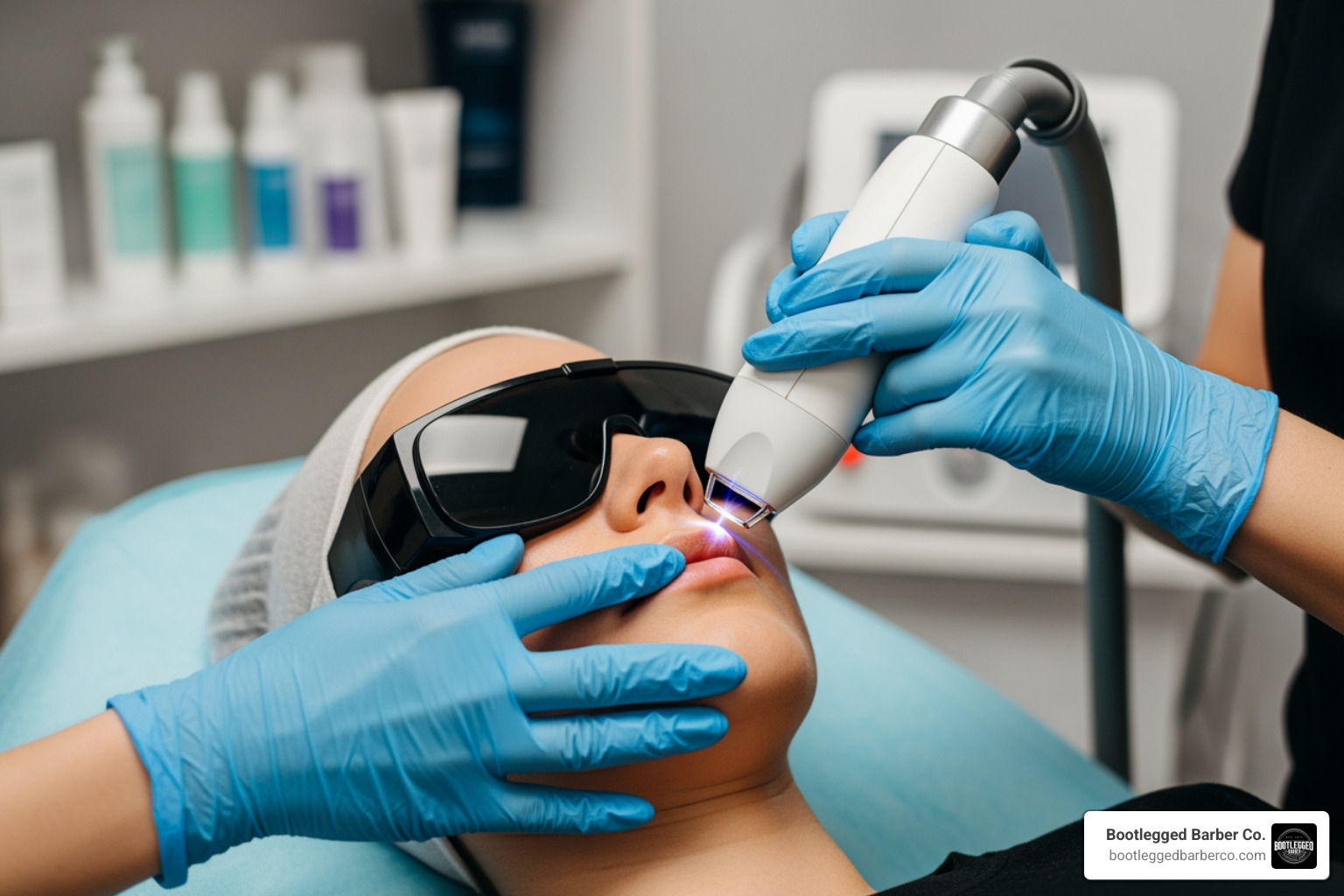
A series of 3 to 8 sessions, spaced weeks apart, leads to significant hair reduction. The sensation is often described as a quick snap, which is generally less painful than waxing, and results can last for months or years. However, laser hair removal is expensive and doesn't work well on blonde, grey, or red hair. People with darker skin tones require a specific type of laser to avoid skin damage. For a detailed breakdown, take a look at How laser hair removal works.
Electrolysis
For truly permanent facial hair removal, electrolysis is the only answer. It is the only method the FDA recognizes for permanent hair removal.
An electrologist inserts a fine probe into each hair follicle, using an electrical current to destroy its ability to produce new hair. Once a follicle is treated, it's gone for good.

The biggest advantage is that electrolysis works on all hair colors and skin types. The downside is that it's a slow, meticulous process. Treating each follicle individually requires numerous sessions, which can be expensive and time-consuming. The sensation is often described as a quick pinch or burst of heat.
To help you weigh your options, here's how the main methods stack up:
| Method | Cost (Initial) | Pain Level | Results Duration | Best For |
|---|---|---|---|---|
| Shaving | Very Low | None | 1-2 days | Quick touch-ups, fine hair, sensitive skin |
| Waxing | Low to Moderate | Moderate | 2-4 weeks | Larger areas, coarse hair |
| Sugaring | Low to Moderate | Mild | Up to 6 weeks | Sensitive skin, finer hair |
| Threading | Low to Moderate | Mild | Up to 6 weeks | Precision shaping (eyebrows), sensitive skin |
| Epilating | Moderate | Moderate | Up to 4 weeks | Root removal at home, all over face |
| Depilatory Creams | Very Low | None | 1-2 weeks | Quick, painless, surface-level removal |
| Laser Hair Removal | High | Mild | Permanent Reduction (months-years) | Long-term reduction, dark hair/light skin |
| Electrolysis | High | Moderate | Permanent Removal | All hair/skin types, definitive removal |
Choosing a professional method depends on your goals, budget, and hair type. At Bootlegged Barber Co., we know professional services make a difference, and having skilled experts in your corner is key.
Skin Preparation and Aftercare
The facial hair removal method you choose is only half the battle. How you prep your skin before and care for it after is the difference between a smooth glow and a face full of red bumps. A consistent routine is crucial for preventing irritation, breakouts, and ingrown hairs. If you're particularly concerned about ingrowns, we've got you covered with detailed guidance on how to Learn about preventing ingrowns.
How to Prepare Skin for Facial Hair Removal
Proper preparation is your best defense against unwanted side effects. Follow these steps for better results:
- Cleanse Your Skin: Always start with a clean face. Use a gentle cleanser to remove makeup, dirt, and oil to prevent bacteria from entering open pores.
- Gently Exfoliate: A light exfoliation 24-48 hours before waxing, sugaring, or dermaplaning can lift hairs and remove dead skin, making removal easier. Avoid harsh scrubs or chemical exfoliants right before your session.
- Pause Active Ingredients: Discontinue potent skincare like retinoids or AHAs for several days before waxing or dermaplaning to avoid increasing skin sensitivity and the risk of lifting.
- Check Hair Length: For waxing and sugaring, hair length matters. Waxing needs about 1/4 inch of growth, while sugaring can work on hair as short as 1/16 inch.
- Keep Skin Dry: For waxing, sugaring, and dermaplaning, skin must be completely clean and dry. For shaving, however, wet skin and hair provide a smoother glide.
Proper Aftercare for Facial Hair Removal
After hair removal, your skin is sensitive and needs some TLC to heal properly.
- Protect from Sun: Freshly treated skin is vulnerable to UV damage. Avoid direct sun for 24-48 hours and always wear a broad-spectrum sunscreen.
- Stay Cool: For the first 24 hours, avoid hot showers, saunas, steam rooms, and intense workouts. Heat and sweat can irritate open follicles and lead to breakouts.
- Soothe and Calm: Immediately after, apply a calming agent like aloe vera gel or use a cold compress to reduce redness and inflammation.
- Moisturize: Keep your skin hydrated with a gentle, non-comedogenic moisturizer to help restore its protective barrier.
- Give Pores a Break: Avoid makeup, fragranced lotions, and active skincare ingredients for at least 12-24 hours to prevent clogging or irritating open pores.
Taking aftercare seriously helps maintain that smooth, confident feeling. To pamper your skin further, you might want to Consider a post-treatment facial to calm and nourish your skin.
Frequently Asked Questions about Facial Hair Removal
Will removing facial hair make it grow back thicker?
No, this is a persistent myth. Removing facial hair will not make it grow back thicker, darker, or faster. When you shave, you cut the hair at a blunt angle, which can feel coarse as it grows out. This creates the illusion of thicker hair, but it doesn't change the hair's structure or growth rate.
In fact, methods that remove hair from the root—like waxing, sugaring, and threading—can weaken the hair follicle over time. With consistent treatment, this can lead to regrowth that is finer and sparser.
What is the best facial hair removal method for sensitive skin?
For sensitive skin, choosing the right facial hair removal method is crucial to avoid redness and irritation. Here are some of the top recommendations:
- Sugaring: Often considered the best option. The natural paste adheres more to the hair than the skin and is removed in the direction of growth, making it gentler than waxing.
- Threading: An excellent chemical-free choice for precision areas like eyebrows. Since it only uses a cotton thread, the risk of irritation is minimal.
- Epilating: While it can be painful, some with sensitive skin prefer it because it pulls hair without removing the top layer of skin cells like waxing can.
- Electric Shaver: For surface removal, a high-quality electric shaver designed for sensitive skin can minimize the friction and irritation often caused by manual razors.
No matter which method you choose, always perform a patch test 24 hours beforehand to see how your skin reacts.
Can facial hair be removed permanently?
Yes, permanent facial hair removal is possible, but it's important to understand the difference between permanent removal and permanent reduction.
Electrolysis is the only method recognized by the FDA for true permanent hair removal. It uses an electrical current to destroy each individual hair follicle, preventing it from ever growing hair again. Electrolysis works on all hair colors and skin types, making it a universally effective solution.
Laser hair removal is approved by the FDA for permanent hair reduction. This means it significantly reduces the amount of hair that grows back, and any hair that does return is typically much finer and lighter. While it may not eliminate every single hair forever, most people achieve long-lasting smoothness and may only need occasional touch-up sessions.
Conclusion: Defining Your Grooming Routine
You've now explored the full map of facial hair removal, from quick at-home options like shaving to permanent professional solutions like electrolysis. The journey to smooth skin is unique for everyone.
There is no single "best" method. The right choice for you depends on your skin type, schedule, budget, and desired results. It's a balance of convenience versus longevity, and cost versus effectiveness. Whether you prefer a quick daily routine or a long-term investment, what matters is that your choice fits your lifestyle. Whatever you choose, always prioritize skin health by following proper preparation and aftercare.
For professional methods like threading, laser, and electrolysis, the skill of a trained technician is essential for safe and effective results.
At Bootlegged Barber Co., our reputation is built on precision grooming and helping clients feel confident. While we specialize in traditional barbering services like haircuts and beard trims, we understand that comprehensive grooming has many facets. If you're exploring facial hair removal options and need professional guidance, we are happy to point you toward trusted local specialists who provide the expert care you deserve.
Your grooming routine should empower you. Ready to take the next step in defining yours? Find your perfect grooming service and let us help you achieve your look with the precision and care you deserve.
Your Path to Smooth, Hair-Free Skin
Facial hair removal is a common grooming concern. Whether you're dealing with peach fuzz, upper lip hair, or coarse chin growth, the good news is that you have plenty of options.
Quick Answer: Best Facial Hair Removal Methods
| Method | Duration | Best For | Pain Level |
|---|---|---|---|
| Shaving | 1-2 days | Quick results, large areas | None |
| Waxing | 2-4 weeks | Root removal, longer results | Moderate |
| Threading | Up to 6 weeks | Precision work, eyebrows | Mild |
| Laser | Permanent reduction | Long-term solution | Mild |
| Electrolysis | Permanent removal | All hair types | Moderate |
Facial hair is completely normal, and the decision to remove it is personal. There's no right or wrong answer—it's about what makes you feel your best.
What matters is finding a method that suits your skin type, pain tolerance, budget, and lifestyle. Options range from surface-level (shaving) to root removal (waxing), and from temporary at-home solutions to long-lasting professional treatments.
Safety should always come first. Your facial skin is more delicate than the rest of your body, and the wrong method—or improper technique—can lead to irritation, breakouts, or scarring.
I'm Connor Stone from Bootlegged Barber Co. I've seen how the right grooming techniques can boost confidence. We help our clients steer their options to find solutions that fit their needs.
At-Home Methods: Convenience and Control
At-home facial hair removal offers control, convenience, and cost savings. You can manage unwanted hair on your schedule, in private, and get immediate results without an appointment. The key is understanding what each method does, how long results last, and how to keep your skin healthy.
Shaving
Shaving is the most straightforward option, cutting hair at the skin's surface for an instantly smooth feeling. It's painless, fast, and affordable. As aesthetic nurse practitioner Melanie Abeyta notes, "Shaving is the most effective method for removing hair, with the least side effects, which is great if you have sensitive skin." The main downside is rapid regrowth (1-2 days), which can feel coarse due to the blunt tip created by the blade. Myth buster: shaving does not make hair grow back thicker or darker. You also risk nicks and razor burn.
For a safer shave, dermatologists advise wetting the skin, using shaving cream, shaving with the grain, and rinsing the blade often. Replace blades after 5-7 shaves and store your razor in a dry place. An electric razor may be better for acne-prone skin. For more guidance, check out these tips for a clean shave from dermatologists.
Waxing vs. Sugaring
These methods pull hair from the root for longer-lasting smoothness. They've been used for ages and deliver results that far outlast shaving.
Waxing uses warm wax that is spread on the skin and quickly removed, pulling hair from the follicle. Hard wax is often less irritating because it adheres to the hair more than the skin.
Sugaring uses a natural paste of sugar, lemon, and water. It's applied against hair growth and flicked off in the direction of growth, which is gentler on the skin and causes less hair breakage.
With waxing, you get 2-4 weeks of smoothness, while sugaring can last up to 6 weeks. Over time, hair may grow back finer. The downside is pain. Redness, irritation, and ingrown hairs are also possible. A key safety tip: avoid waxing if you use products like Retin-A, as they thin the skin. Proper at-home technique is crucial to prevent injury. For professional precision and safety, learn more on professional waxing services.
Dermaplaning
Dermaplaning is a popular dual-action method for facial hair removal and exfoliation. It involves using a sharp blade to gently scrape away dead skin cells and fine vellus hair ("peach fuzz"). The result is instantly smooth, glowing skin that allows for flawless makeup application and better skincare absorption. Makeup artist Shreni Patel recommends it for creating a "better canvas for not only makeup but better skin care absorption."
Results last about two weeks. While at-home tools are accessible, improper technique can cause nicks or irritation. As Jodi Logerfo, DNP, describes it, dermaplaning is "the use of a single-blade razor on dry skin... to exfoliate, getting rid of the top layer of dead skin cells and those pesky, fine vellus hairs." For more details, you can read about what is dermaplaning.
Epilators and Depilatory Creams
These methods offer different approaches for areas like the upper lip and chin.
Epilators are electrical devices with multiple tiny tweezers that pull hairs from the root. Results can last up to 4 weeks, and they can grab very short hairs. The catch is that epilation can be quite painful, especially at first. However, some with sensitive skin find it gentler than waxing because it doesn't remove the top layer of skin cells.
Depilatory creams use chemicals to dissolve hair just below the skin's surface. They are painless and work in 3-10 minutes, but hair grows back within a week or two. The chemicals can be harsh, potentially causing irritation or burns. Always patch-test 24 hours beforehand, never exceed the recommended time, and choose a formula made specifically for the face.
Professional and Long-Term Facial Hair Removal
When at-home methods aren't enough, professional facial hair removal treatments offer longer-lasting or even permanent results. They typically cost more upfront but save you from constant upkeep. When it comes to your face, expertise matters. For a deeper look at what professional treatments can offer, check out Information on professional services.
Threading
Threading is an ancient technique from India, prized for its precision in facial hair removal, especially for shaping eyebrows. The process requires serious skill: a technician twists a thin cotton thread and glides it across the skin, catching and pulling hairs from the root in a precise line.
Because it uses no chemicals, threading is a great option for skin that reacts poorly to wax. Results are clean, defined, and can last up to six weeks. The downside is that it can be painful, particularly for newcomers. A skilled practitioner is essential to avoid irritation or broken hairs.
Laser Hair Removal
Laser hair removal is a popular professional treatment for long-term results. The FDA approves it for permanent hair reduction. The laser emits a concentrated light that is absorbed by the hair's pigment, creating heat that damages the follicle and slows future growth. It only works on actively growing hair, so multiple sessions are necessary.
A series of 3 to 8 sessions, spaced weeks apart, leads to significant hair reduction. The sensation is often described as a quick snap, which is generally less painful than waxing, and results can last for months or years. However, laser hair removal is expensive and doesn't work well on blonde, grey, or red hair. People with darker skin tones require a specific type of laser to avoid skin damage. For a detailed breakdown, take a look at How laser hair removal works.
Electrolysis
For truly permanent facial hair removal, electrolysis is the only answer. It is the only method the FDA recognizes for permanent hair removal.
An electrologist inserts a fine probe into each hair follicle, using an electrical current to destroy its ability to produce new hair. Once a follicle is treated, it's gone for good.
The biggest advantage is that electrolysis works on all hair colors and skin types. The downside is that it's a slow, meticulous process. Treating each follicle individually requires numerous sessions, which can be expensive and time-consuming. The sensation is often described as a quick pinch or burst of heat.
To help you weigh your options, here's how the main methods stack up:
| Method | Cost (Initial) | Pain Level | Results Duration | Best For |
|---|---|---|---|---|
| Shaving | Very Low | None | 1-2 days | Quick touch-ups, fine hair, sensitive skin |
| Waxing | Low to Moderate | Moderate | 2-4 weeks | Larger areas, coarse hair |
| Sugaring | Low to Moderate | Mild | Up to 6 weeks | Sensitive skin, finer hair |
| Threading | Low to Moderate | Mild | Up to 6 weeks | Precision shaping (eyebrows), sensitive skin |
| Epilating | Moderate | Moderate | Up to 4 weeks | Root removal at home, all over face |
| Depilatory Creams | Very Low | None | 1-2 weeks | Quick, painless, surface-level removal |
| Laser Hair Removal | High | Mild | Permanent Reduction (months-years) | Long-term reduction, dark hair/light skin |
| Electrolysis | High | Moderate | Permanent Removal | All hair/skin types, definitive removal |
Choosing a professional method depends on your goals, budget, and hair type. At Bootlegged Barber Co., we know professional services make a difference, and having skilled experts in your corner is key.
Skin Preparation and Aftercare
The facial hair removal method you choose is only half the battle. How you prep your skin before and care for it after is the difference between a smooth glow and a face full of red bumps. A consistent routine is crucial for preventing irritation, breakouts, and ingrown hairs. If you're particularly concerned about ingrowns, we've got you covered with detailed guidance on how to Learn about preventing ingrowns.
How to Prepare Skin for Facial Hair Removal
Proper preparation is your best defense against unwanted side effects. Follow these steps for better results:
- Cleanse Your Skin: Always start with a clean face. Use a gentle cleanser to remove makeup, dirt, and oil to prevent bacteria from entering open pores.
- Gently Exfoliate: A light exfoliation 24-48 hours before waxing, sugaring, or dermaplaning can lift hairs and remove dead skin, making removal easier. Avoid harsh scrubs or chemical exfoliants right before your session.
- Pause Active Ingredients: Discontinue potent skincare like retinoids or AHAs for several days before waxing or dermaplaning to avoid increasing skin sensitivity and the risk of lifting.
- Check Hair Length: For waxing and sugaring, hair length matters. Waxing needs about 1/4 inch of growth, while sugaring can work on hair as short as 1/16 inch.
- Keep Skin Dry: For waxing, sugaring, and dermaplaning, skin must be completely clean and dry. For shaving, however, wet skin and hair provide a smoother glide.
Proper Aftercare for Facial Hair Removal
After hair removal, your skin is sensitive and needs some TLC to heal properly.
- Protect from Sun: Freshly treated skin is vulnerable to UV damage. Avoid direct sun for 24-48 hours and always wear a broad-spectrum sunscreen.
- Stay Cool: For the first 24 hours, avoid hot showers, saunas, steam rooms, and intense workouts. Heat and sweat can irritate open follicles and lead to breakouts.
- Soothe and Calm: Immediately after, apply a calming agent like aloe vera gel or use a cold compress to reduce redness and inflammation.
- Moisturize: Keep your skin hydrated with a gentle, non-comedogenic moisturizer to help restore its protective barrier.
- Give Pores a Break: Avoid makeup, fragranced lotions, and active skincare ingredients for at least 12-24 hours to prevent clogging or irritating open pores.
Taking aftercare seriously helps maintain that smooth, confident feeling. To pamper your skin further, you might want to Consider a post-treatment facial to calm and nourish your skin.
Frequently Asked Questions about Facial Hair Removal
Will removing facial hair make it grow back thicker?
No, this is a persistent myth. Removing facial hair will not make it grow back thicker, darker, or faster. When you shave, you cut the hair at a blunt angle, which can feel coarse as it grows out. This creates the illusion of thicker hair, but it doesn't change the hair's structure or growth rate.
In fact, methods that remove hair from the root—like waxing, sugaring, and threading—can weaken the hair follicle over time. With consistent treatment, this can lead to regrowth that is finer and sparser.
What is the best facial hair removal method for sensitive skin?
For sensitive skin, choosing the right facial hair removal method is crucial to avoid redness and irritation. Here are some of the top recommendations:
- Sugaring: Often considered the best option. The natural paste adheres more to the hair than the skin and is removed in the direction of growth, making it gentler than waxing.
- Threading: An excellent chemical-free choice for precision areas like eyebrows. Since it only uses a cotton thread, the risk of irritation is minimal.
- Epilating: While it can be painful, some with sensitive skin prefer it because it pulls hair without removing the top layer of skin cells like waxing can.
- Electric Shaver: For surface removal, a high-quality electric shaver designed for sensitive skin can minimize the friction and irritation often caused by manual razors.
No matter which method you choose, always perform a patch test 24 hours beforehand to see how your skin reacts.
Can facial hair be removed permanently?
Yes, permanent facial hair removal is possible, but it's important to understand the difference between permanent removal and permanent reduction.
Electrolysis is the only method recognized by the FDA for true permanent hair removal. It uses an electrical current to destroy each individual hair follicle, preventing it from ever growing hair again. Electrolysis works on all hair colors and skin types, making it a universally effective solution.
Laser hair removal is approved by the FDA for permanent hair reduction. This means it significantly reduces the amount of hair that grows back, and any hair that does return is typically much finer and lighter. While it may not eliminate every single hair forever, most people achieve long-lasting smoothness and may only need occasional touch-up sessions.
Conclusion: Defining Your Grooming Routine
You've now explored the full map of facial hair removal, from quick at-home options like shaving to permanent professional solutions like electrolysis. The journey to smooth skin is unique for everyone.
There is no single "best" method. The right choice for you depends on your skin type, schedule, budget, and desired results. It's a balance of convenience versus longevity, and cost versus effectiveness. Whether you prefer a quick daily routine or a long-term investment, what matters is that your choice fits your lifestyle. Whatever you choose, always prioritize skin health by following proper preparation and aftercare.
For professional methods like threading, laser, and electrolysis, the skill of a trained technician is essential for safe and effective results.
At Bootlegged Barber Co., our reputation is built on precision grooming and helping clients feel confident. While we specialize in traditional barbering services like haircuts and beard trims, we understand that comprehensive grooming has many facets. If you're exploring facial hair removal options and need professional guidance, we are happy to point you toward trusted local specialists who provide the expert care you deserve.
Your grooming routine should empower you. Ready to take the next step in defining yours? Find your perfect grooming service and let us help you achieve your look with the precision and care you deserve.

Your Path to Smooth, Hair-Free Skin
Facial hair removal is a common grooming concern. Whether you're dealing with peach fuzz, upper lip hair, or coarse chin growth, the good news is that you have plenty of options.
Quick Answer: Best Facial Hair Removal Methods
| Method | Duration | Best For | Pain Level |
|---|---|---|---|
| Shaving | 1-2 days | Quick results, large areas | None |
| Waxing | 2-4 weeks | Root removal, longer results | Moderate |
| Threading | Up to 6 weeks | Precision work, eyebrows | Mild |
| Laser | Permanent reduction | Long-term solution | Mild |
| Electrolysis | Permanent removal | All hair types | Moderate |
Facial hair is completely normal, and the decision to remove it is personal. There's no right or wrong answer—it's about what makes you feel your best.
What matters is finding a method that suits your skin type, pain tolerance, budget, and lifestyle. Options range from surface-level (shaving) to root removal (waxing), and from temporary at-home solutions to long-lasting professional treatments.
Safety should always come first. Your facial skin is more delicate than the rest of your body, and the wrong method—or improper technique—can lead to irritation, breakouts, or scarring.
I'm Connor Stone from Bootlegged Barber Co. I've seen how the right grooming techniques can boost confidence. We help our clients steer their options to find solutions that fit their needs.
At-Home Methods: Convenience and Control
At-home facial hair removal offers control, convenience, and cost savings. You can manage unwanted hair on your schedule, in private, and get immediate results without an appointment. The key is understanding what each method does, how long results last, and how to keep your skin healthy.
Shaving
Shaving is the most straightforward option, cutting hair at the skin's surface for an instantly smooth feeling. It's painless, fast, and affordable. As aesthetic nurse practitioner Melanie Abeyta notes, "Shaving is the most effective method for removing hair, with the least side effects, which is great if you have sensitive skin." The main downside is rapid regrowth (1-2 days), which can feel coarse due to the blunt tip created by the blade. Myth buster: shaving does not make hair grow back thicker or darker. You also risk nicks and razor burn.
For a safer shave, dermatologists advise wetting the skin, using shaving cream, shaving with the grain, and rinsing the blade often. Replace blades after 5-7 shaves and store your razor in a dry place. An electric razor may be better for acne-prone skin. For more guidance, check out these tips for a clean shave from dermatologists.
Waxing vs. Sugaring
These methods pull hair from the root for longer-lasting smoothness. They've been used for ages and deliver results that far outlast shaving.
Waxing uses warm wax that is spread on the skin and quickly removed, pulling hair from the follicle. Hard wax is often less irritating because it adheres to the hair more than the skin.
Sugaring uses a natural paste of sugar, lemon, and water. It's applied against hair growth and flicked off in the direction of growth, which is gentler on the skin and causes less hair breakage.
With waxing, you get 2-4 weeks of smoothness, while sugaring can last up to 6 weeks. Over time, hair may grow back finer. The downside is pain. Redness, irritation, and ingrown hairs are also possible. A key safety tip: avoid waxing if you use products like Retin-A, as they thin the skin. Proper at-home technique is crucial to prevent injury. For professional precision and safety, learn more on professional waxing services.
Dermaplaning
Dermaplaning is a popular dual-action method for facial hair removal and exfoliation. It involves using a sharp blade to gently scrape away dead skin cells and fine vellus hair ("peach fuzz"). The result is instantly smooth, glowing skin that allows for flawless makeup application and better skincare absorption. Makeup artist Shreni Patel recommends it for creating a "better canvas for not only makeup but better skin care absorption."
Results last about two weeks. While at-home tools are accessible, improper technique can cause nicks or irritation. As Jodi Logerfo, DNP, describes it, dermaplaning is "the use of a single-blade razor on dry skin... to exfoliate, getting rid of the top layer of dead skin cells and those pesky, fine vellus hairs." For more details, you can read about what is dermaplaning.
Epilators and Depilatory Creams
These methods offer different approaches for areas like the upper lip and chin.
Epilators are electrical devices with multiple tiny tweezers that pull hairs from the root. Results can last up to 4 weeks, and they can grab very short hairs. The catch is that epilation can be quite painful, especially at first. However, some with sensitive skin find it gentler than waxing because it doesn't remove the top layer of skin cells.
Depilatory creams use chemicals to dissolve hair just below the skin's surface. They are painless and work in 3-10 minutes, but hair grows back within a week or two. The chemicals can be harsh, potentially causing irritation or burns. Always patch-test 24 hours beforehand, never exceed the recommended time, and choose a formula made specifically for the face.
Professional and Long-Term Facial Hair Removal
When at-home methods aren't enough, professional facial hair removal treatments offer longer-lasting or even permanent results. They typically cost more upfront but save you from constant upkeep. When it comes to your face, expertise matters. For a deeper look at what professional treatments can offer, check out Information on professional services.
Threading
Threading is an ancient technique from India, prized for its precision in facial hair removal, especially for shaping eyebrows. The process requires serious skill: a technician twists a thin cotton thread and glides it across the skin, catching and pulling hairs from the root in a precise line.
Because it uses no chemicals, threading is a great option for skin that reacts poorly to wax. Results are clean, defined, and can last up to six weeks. The downside is that it can be painful, particularly for newcomers. A skilled practitioner is essential to avoid irritation or broken hairs.
Laser Hair Removal
Laser hair removal is a popular professional treatment for long-term results. The FDA approves it for permanent hair reduction. The laser emits a concentrated light that is absorbed by the hair's pigment, creating heat that damages the follicle and slows future growth. It only works on actively growing hair, so multiple sessions are necessary.
A series of 3 to 8 sessions, spaced weeks apart, leads to significant hair reduction. The sensation is often described as a quick snap, which is generally less painful than waxing, and results can last for months or years. However, laser hair removal is expensive and doesn't work well on blonde, grey, or red hair. People with darker skin tones require a specific type of laser to avoid skin damage. For a detailed breakdown, take a look at How laser hair removal works.
Electrolysis
For truly permanent facial hair removal, electrolysis is the only answer. It is the only method the FDA recognizes for permanent hair removal.
An electrologist inserts a fine probe into each hair follicle, using an electrical current to destroy its ability to produce new hair. Once a follicle is treated, it's gone for good.
The biggest advantage is that electrolysis works on all hair colors and skin types. The downside is that it's a slow, meticulous process. Treating each follicle individually requires numerous sessions, which can be expensive and time-consuming. The sensation is often described as a quick pinch or burst of heat.
To help you weigh your options, here's how the main methods stack up:
| Method | Cost (Initial) | Pain Level | Results Duration | Best For |
|---|---|---|---|---|
| Shaving | Very Low | None | 1-2 days | Quick touch-ups, fine hair, sensitive skin |
| Waxing | Low to Moderate | Moderate | 2-4 weeks | Larger areas, coarse hair |
| Sugaring | Low to Moderate | Mild | Up to 6 weeks | Sensitive skin, finer hair |
| Threading | Low to Moderate | Mild | Up to 6 weeks | Precision shaping (eyebrows), sensitive skin |
| Epilating | Moderate | Moderate | Up to 4 weeks | Root removal at home, all over face |
| Depilatory Creams | Very Low | None | 1-2 weeks | Quick, painless, surface-level removal |
| Laser Hair Removal | High | Mild | Permanent Reduction (months-years) | Long-term reduction, dark hair/light skin |
| Electrolysis | High | Moderate | Permanent Removal | All hair/skin types, definitive removal |
Choosing a professional method depends on your goals, budget, and hair type. At Bootlegged Barber Co., we know professional services make a difference, and having skilled experts in your corner is key.
Skin Preparation and Aftercare
The facial hair removal method you choose is only half the battle. How you prep your skin before and care for it after is the difference between a smooth glow and a face full of red bumps. A consistent routine is crucial for preventing irritation, breakouts, and ingrown hairs. If you're particularly concerned about ingrowns, we've got you covered with detailed guidance on how to Learn about preventing ingrowns.
How to Prepare Skin for Facial Hair Removal
Proper preparation is your best defense against unwanted side effects. Follow these steps for better results:
- Cleanse Your Skin: Always start with a clean face. Use a gentle cleanser to remove makeup, dirt, and oil to prevent bacteria from entering open pores.
- Gently Exfoliate: A light exfoliation 24-48 hours before waxing, sugaring, or dermaplaning can lift hairs and remove dead skin, making removal easier. Avoid harsh scrubs or chemical exfoliants right before your session.
- Pause Active Ingredients: Discontinue potent skincare like retinoids or AHAs for several days before waxing or dermaplaning to avoid increasing skin sensitivity and the risk of lifting.
- Check Hair Length: For waxing and sugaring, hair length matters. Waxing needs about 1/4 inch of growth, while sugaring can work on hair as short as 1/16 inch.
- Keep Skin Dry: For waxing, sugaring, and dermaplaning, skin must be completely clean and dry. For shaving, however, wet skin and hair provide a smoother glide.
Proper Aftercare for Facial Hair Removal
After hair removal, your skin is sensitive and needs some TLC to heal properly.
- Protect from Sun: Freshly treated skin is vulnerable to UV damage. Avoid direct sun for 24-48 hours and always wear a broad-spectrum sunscreen.
- Stay Cool: For the first 24 hours, avoid hot showers, saunas, steam rooms, and intense workouts. Heat and sweat can irritate open follicles and lead to breakouts.
- Soothe and Calm: Immediately after, apply a calming agent like aloe vera gel or use a cold compress to reduce redness and inflammation.
- Moisturize: Keep your skin hydrated with a gentle, non-comedogenic moisturizer to help restore its protective barrier.
- Give Pores a Break: Avoid makeup, fragranced lotions, and active skincare ingredients for at least 12-24 hours to prevent clogging or irritating open pores.
Taking aftercare seriously helps maintain that smooth, confident feeling. To pamper your skin further, you might want to Consider a post-treatment facial to calm and nourish your skin.
Frequently Asked Questions about Facial Hair Removal
Will removing facial hair make it grow back thicker?
No, this is a persistent myth. Removing facial hair will not make it grow back thicker, darker, or faster. When you shave, you cut the hair at a blunt angle, which can feel coarse as it grows out. This creates the illusion of thicker hair, but it doesn't change the hair's structure or growth rate.
In fact, methods that remove hair from the root—like waxing, sugaring, and threading—can weaken the hair follicle over time. With consistent treatment, this can lead to regrowth that is finer and sparser.
What is the best facial hair removal method for sensitive skin?
For sensitive skin, choosing the right facial hair removal method is crucial to avoid redness and irritation. Here are some of the top recommendations:
- Sugaring: Often considered the best option. The natural paste adheres more to the hair than the skin and is removed in the direction of growth, making it gentler than waxing.
- Threading: An excellent chemical-free choice for precision areas like eyebrows. Since it only uses a cotton thread, the risk of irritation is minimal.
- Epilating: While it can be painful, some with sensitive skin prefer it because it pulls hair without removing the top layer of skin cells like waxing can.
- Electric Shaver: For surface removal, a high-quality electric shaver designed for sensitive skin can minimize the friction and irritation often caused by manual razors.
No matter which method you choose, always perform a patch test 24 hours beforehand to see how your skin reacts.
Can facial hair be removed permanently?
Yes, permanent facial hair removal is possible, but it's important to understand the difference between permanent removal and permanent reduction.
Electrolysis is the only method recognized by the FDA for true permanent hair removal. It uses an electrical current to destroy each individual hair follicle, preventing it from ever growing hair again. Electrolysis works on all hair colors and skin types, making it a universally effective solution.
Laser hair removal is approved by the FDA for permanent hair reduction. This means it significantly reduces the amount of hair that grows back, and any hair that does return is typically much finer and lighter. While it may not eliminate every single hair forever, most people achieve long-lasting smoothness and may only need occasional touch-up sessions.
Conclusion: Defining Your Grooming Routine
You've now explored the full map of facial hair removal, from quick at-home options like shaving to permanent professional solutions like electrolysis. The journey to smooth skin is unique for everyone.
There is no single "best" method. The right choice for you depends on your skin type, schedule, budget, and desired results. It's a balance of convenience versus longevity, and cost versus effectiveness. Whether you prefer a quick daily routine or a long-term investment, what matters is that your choice fits your lifestyle. Whatever you choose, always prioritize skin health by following proper preparation and aftercare.
For professional methods like threading, laser, and electrolysis, the skill of a trained technician is essential for safe and effective results.
At Bootlegged Barber Co., our reputation is built on precision grooming and helping clients feel confident. While we specialize in traditional barbering services like haircuts and beard trims, we understand that comprehensive grooming has many facets. If you're exploring facial hair removal options and need professional guidance, we are happy to point you toward trusted local specialists who provide the expert care you deserve.
Your grooming routine should empower you. Ready to take the next step in defining yours? Find your perfect grooming service and let us help you achieve your look with the precision and care you deserve.


