
Beyond the Blend: Your Guide to Fades and Tapers
Decoding the Barber's Chair Lingo
Fade and taper are two of the most requested haircut styles in modern barbershops, yet many people use these terms interchangeably without understanding their key differences.
Quick Answer:
- Fade: Hair gradually blends from longer on top to very short or skin on the sides, creating a dramatic contrast
- Taper: Hair gradually shortens from top to bottom but maintains more length overall, never going to skin
- Key Difference: Fades go to skin or very close to it; tapers stop at a longer length
- Maintenance: Fades need touch-ups every 2-4 weeks; tapers are more forgiving
The confusion between these cuts is understandable. As one barber forum user put it: "A fade goes from hair to skin. A taper goes from hair to shorter hair." This simple distinction makes all the difference in your final look.
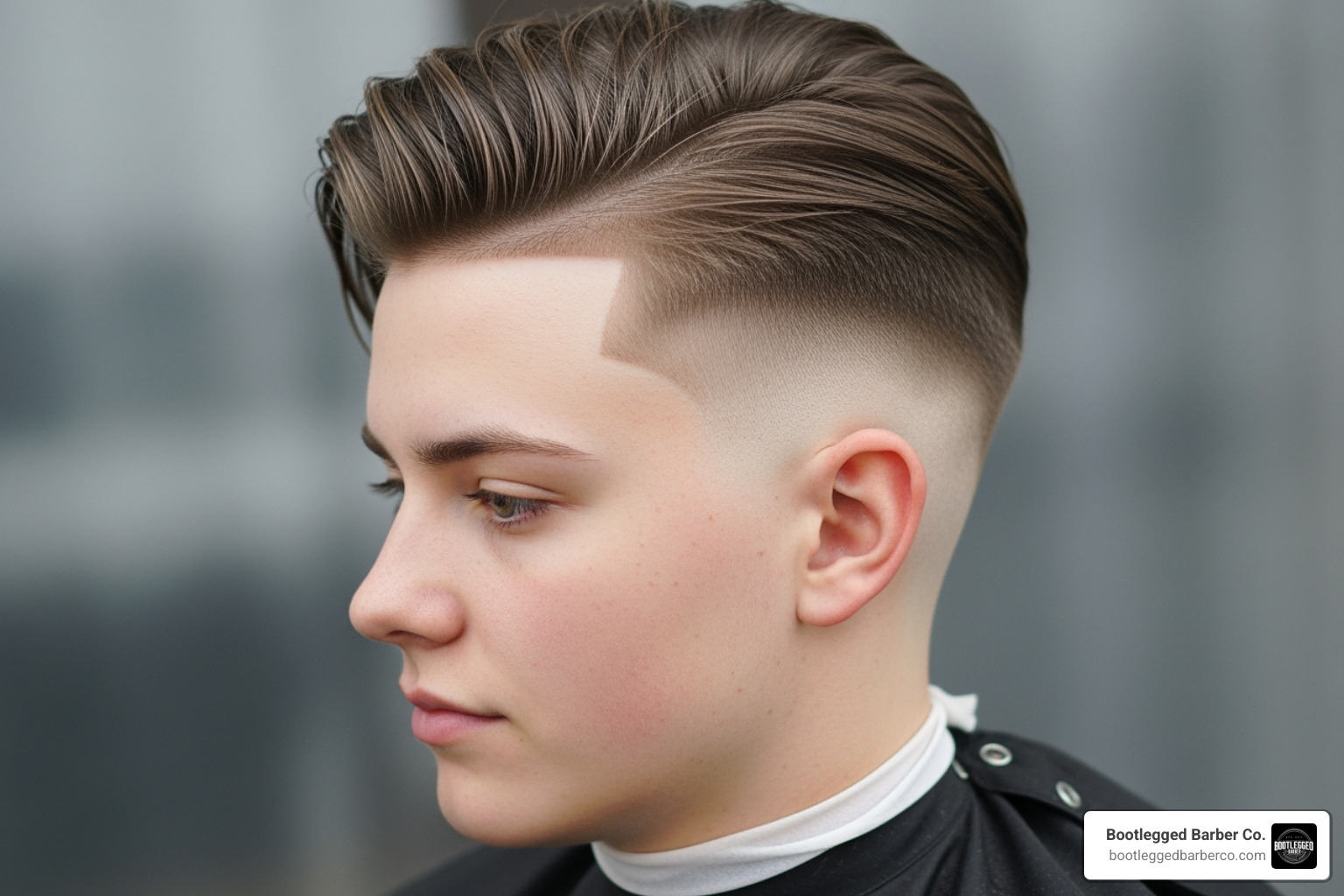
A fade creates a more dramatic, modern appearance by using clippers to blend hair down to the skin. The contrast is sharp and eye-catching.
A taper, on the other hand, offers a subtle, classic look that gradually shortens hair without exposing the scalp. It's the foundation of most traditional men's haircuts.
Understanding this difference helps you communicate clearly with your barber and avoid the disappointment of getting a style you didn't expect.
I'm Connor Stone from Bootlegged Barber Co., and I've spent years helping clients steer fade and taper cuts through our community-focused approach to barbering. My experience in the industry has shown me that clear communication about these styles leads to better results and happier clients.

Key Fade and taper vocabulary:
What is a Fade Haircut? The Art of the Seamless Blend

A fade haircut is where the magic of modern barbering really shines. Picture hair that flows seamlessly from longer lengths on top down to the skin at the sides and back. That's the essence of a fade – it literally "fades away" as it gets closer to your scalp.
What makes a fade special is its dramatic contrast. While the top keeps substantial length for styling, the sides disappear into practically nothing. This creates that sharp, clean look that screams modern confidence.
The technique requires serious skill. Your barber uses multiple clipper guards, carefully blending each length into the next. No harsh lines, no awkward jumps – just a smooth transition that looks effortless but takes years to master.
Fades work especially well if you've got thick hair that tends to get bulky on the sides. By removing that weight, you're left with a style that's easier to manage and always looks fresh. The edgy, contemporary vibe makes it perfect for anyone wanting to make a statement.
For more insights on popular styles, check out our guide to barber shop haircuts.
The Different Types of Fades
The beauty of fade and taper cuts lies in their versatility. Each fade type offers a different level of contrast and personality.
A low fade starts just above your ears and gently tapers down. It's the most conservative option – professional enough for the office but still gives you that modern edge. Think of it as the "gateway fade" for guys trying the style for the first time.
The mid fade hits right around your temples, creating that perfect balance between subtle and bold. It's probably the most requested fade we see at the shop because it works with almost any hair type and face shape.
Want to make a real statement? A high fade starts way up near the top of your head. This creates maximum contrast and gives you that sharp, athletic look. It's bold, it's confident, and it definitely turns heads.
The skin fade (sometimes called a bald fade) takes things to the extreme. We're talking hair that blends right down to bare skin. It's the cleanest, sharpest look you can get, but it requires the most maintenance to keep looking fresh.
Finally, there's the drop fade – a curved variation that follows the natural shape of your head behind the ears. Instead of a straight line, it "drops" down, creating a softer, more rounded effect that's both unique and stylish.
Each of these represents some of the most common types of fades you'll find in any quality barbershop today.
What is a Taper Haircut? The Timeless, Custom Look

When you're looking for a fade and taper comparison, understanding the taper is essential. A taper haircut is like the gentleman's approach to modern grooming – refined, subtle, and incredibly versatile.
Unlike a fade that blends down to skin, a taper gradually shortens your hair from top to bottom while keeping more length throughout. Think of it as a gentle slope rather than a dramatic cliff. The hair around your ears and neckline gets shorter, but it never disappears completely.
This gradual shortening creates what I call the "boardroom to barbecue" effect – it looks professional enough for your most important meetings, yet relaxed enough for weekend activities. The beauty lies in its understated elegance.
A taper works as the foundation for countless classic men's hairstyles. It's that clean, neat appearance that never goes out of style. Whether you're 25 or 55, a well-executed taper gives you that polished look without screaming for attention.
The best part? Tapers are incredibly forgiving as they grow out. While fades can look scruffy after a few weeks, tapers maintain their shape much longer, making them perfect for busy schedules.
Common Taper Variations
Every taper tells a different story, and choosing the right variation depends on your personal style and lifestyle needs.
The classic taper is your reliable go-to option. It gradually shortens from the crown down to the ears and neckline, creating that timeless, clean-cut appearance that works in virtually any setting. This is often what your grandfather would have called a "proper haircut."
A low taper keeps things incredibly subtle, starting the shortest point just above your ears. If you're nervous about change or work in a conservative environment, this gentle approach gives you that fresh, cleaned-up look without any dramatic shifts.
The high taper offers more definition by starting the transition higher up on your head. You get a cleaner, more structured appearance while still maintaining that classic taper philosophy of never going to skin.
For those focused on the back of their head, a tapered neckline creates a natural, gradual blend at the neck instead of a hard, blocky line. This technique helps your haircut look fresher longer and grows out more naturally.
Finally, the scissor taper relies entirely on shears rather than clippers, creating an even softer, more textured finish. This approach works beautifully for men with finer hair who want that natural, lived-in look.
Each variation maintains that core taper principle – gradual length reduction with sophistication and style.
The Ultimate Comparison: Key Differences Between a Fade and Taper
Now that we've explored both styles, let's get into the real differences between fade and taper haircuts. While both involve gradually shortening hair, the distinctions are more significant than many people realize.
The most obvious difference is hair length. A fade takes your hair down to the skin or extremely close to it, creating that dramatic "bald" look on the sides. A taper, on the other hand, keeps more length throughout and never exposes the scalp. Think of it this way: if you run your hand along a fade, you'll feel skin at the bottom. With a taper, you'll always feel some hair.
Blending technique sets these cuts apart too. Fades require precise clipper work to achieve that seamless transition from hair to skin. The barber needs to master multiple guard lengths and often uses techniques like clipper-over-comb to nail that perfect blend. Tapers rely more on scissor work and longer clipper guards, creating a gentler gradient that's more forgiving if it's not perfectly executed.
When it comes to maintenance frequency, fades are definitely higher maintenance. You'll typically need touch-ups every 2-4 weeks to keep that sharp contrast looking fresh. The dramatic nature of a fade means it shows growth quickly. Tapers are much more forgiving - they can easily go 4-6 weeks between cuts because the gradual length change grows out more naturally.
The overall vibe of each cut tells a different story. Fades scream modern and edgy. They're bold, contemporary, and make a statement. Tapers whisper classic sophistication. They're timeless, professional, and versatile enough for any setting.
Styling options vary between the two as well. Fades work brilliantly with textured tops, pompadours, and modern quiffs because the clean sides create such strong contrast. Tapers complement more traditional styles like side parts, classic cuts, and conservative business looks.
Here's where things get interesting: the term "taper fade" has emerged from all this confusion. Some barbers use this to describe a style that combines elements of both - perhaps a low taper that goes closer to the skin than traditional tapers but doesn't quite reach the dramatic contrast of a true fade. However, this isn't universally recognized, so when asking for a "taper fade," always bring a picture to ensure your barber understands exactly what you're after.
The bottom line? Fade and taper cuts serve different purposes and create entirely different looks. Your choice should depend on your lifestyle, maintenance preferences, and the image you want to project.
Choosing Your Style: Finding the Perfect Cut for You

Choosing between a fade and taper goes way beyond just understanding the technical differences. It's about finding the style that truly fits you - your personality, your lifestyle, and your daily routine.
Think about your mornings. Are you someone who enjoys spending time styling your hair, or do you prefer rolling out of bed with a wash-and-go look? Your answer matters more than you might think.
Fades tend to make a bold statement. They're modern, edgy, and definitely eye-catching. If you work in a creative field or just love staying on top of current trends, a fade might be your perfect match.
Tapers, on the other hand, are the reliable friend of the haircut world. They're classic, professional, and work well in almost any setting. If you're in a more traditional workplace or prefer timeless looks over trendy ones, a taper could be your go-to.
Your haircut should boost your confidence and make you feel like the best version of yourself. After all, it's about more than just hair - it's about shear confidence: how barber shop visits boost your self-esteem.
If you're still figuring out what might work best for your features, you can find out your face shape to help guide your decision.
Matching a Fade and Taper to Your Face Shape and Hair Type
Here's where things get really interesting. The shape of your face and your natural hair texture play huge roles in how a fade and taper will look on you. At Bootlegged Barber Co., we always consider these factors during consultations because the right cut should improve what you've already got.
Face shapes make a bigger difference than most people realize. If you have an oval face, congratulations - you've hit the genetic lottery. Oval faces are incredibly versatile, and you can pull off pretty much any style, whether it's a dramatic high fade or a subtle classic taper.
Got a square face with a strong jawline? A taper can work wonders by softening those sharp angles and creating a more balanced look. Fades can work too, but a mid or low fade tends to complement your features better than going too high and emphasizing the angles even more.
Round faces benefit from styles that add height and structure. A high or mid-fade creates that upward visual pull, making your face appear longer and more defined. The contrast helps draw attention away from the width and adds some serious style points.
For heart, diamond, or rectangle face shapes, it really comes down to what you want to emphasize or balance out. Tapers often work beautifully for heart-shaped faces by balancing a wider forehead, while fades can add structure to diamond faces or create length for rectangular ones.
Hair type is equally important. If you've got thick, dense hair, fades are often a game-changer. They remove all that bulk from the sides, making your hair much more manageable and giving you that clean, sharp look that's hard to achieve when everything's the same length.
Fine or thin hair usually loves tapers. The gradual shortening creates the illusion of more texture and fullness without making your hair look sparse. A scissor taper, especially, can add subtle dimension that makes fine hair look more substantial.
Curly hair can rock both styles beautifully. Fades create amazing contrast that really makes those curls on top pop, while tapers offer a more natural flow that lets your curls do their thing without looking overly styled.
Maintenance Needs: How to Keep Your Fade and Taper Looking Fresh
Let's talk about the reality of upkeep - because even the best haircut needs some TLC to stay looking sharp.
Fades are high-maintenance relationships. They look absolutely incredible when fresh, but they need attention every 2-4 weeks to keep that crisp, clean look. Since fades go so close to the skin, even small amounts of growth can mess with that perfect line and blend. If you love the dramatic contrast of a fade, just know you'll be seeing your barber regularly.
Tapers are much more forgiving. They're like that easygoing friend who still looks good even when they haven't had their morning coffee. Since tapers keep more length and have softer transitions, they grow out gracefully. You can usually stretch it to 3-5 weeks between appointments before the shape starts losing its appeal.
Between visits, good at-home care makes a huge difference. Wash your hair two to three times a week with quality shampoo and conditioner. Gently towel-dry, and if you use any products, less is usually more.
The key is finding a maintenance schedule that fits your lifestyle and budget. For more detailed guidance on timing your appointments, check out our post on how often should you see your barber.
Talking to Your Barber: How to Ask for the Perfect Cut
We've all been there: sitting in the barber's chair, trying to describe the exact haircut we have in mind. Getting your vision across clearly is half the battle when it comes to walking out with a fade and taper you absolutely love. At Bootlegged Barber Co., we've built our reputation on barber shop customer service that puts understanding your needs first.
The secret to a great haircut starts before the first snip. It begins with clear communication about what you want and what will work best for you.
Bring photos as your best friend. This is hands down the most effective way to communicate your vision. A picture really is worth a thousand words, especially when those words are "you know, kind of short on the sides." Screenshots from Instagram, Pinterest, or even celebrity photos that showcase the specific fade and taper you're after will save you both time and potential disappointment. Don't just bring one photo either – bring a few that capture different angles or variations of what you like.
Get specific about length and placement. Instead of saying "short," tell us exactly what you mean. For a fade, explain where you want it to start – low around the ears, mid at the temples, or high up on the head. Let us know how close to the skin you want to go: "down to skin," "a number 1," or "blended into a zero." For a taper, describe how subtle you want the transition and whether you want it cleaned up tight around the ears and neckline.
Talk about the contrast you're going for. Do you want that dramatic, edgy look that comes with a sharp fade, or are you leaning toward the subtle, polished transition of a taper? Being upfront about whether you want bold contrast or something more understated helps us nail the overall vibe you're after.
Your hair type and daily routine matter more than you might think. Let us know whether your hair is thick, fine, curly, or straight. Tell us how much time you realistically spend on your hair each morning. If you're a wash-and-go person, we'll steer you toward a style that works with your lifestyle, not against it.
Never hesitate to ask questions. If you're not sure about terminology or what a certain style will look like on you, speak up! We're here to guide you through the process. We can explain which variation of a fade and taper will work best with your face shape, hair type, and maintenance preferences.
The consultation process offers incredible 4 benefits of a personal consultation before a haircut. It ensures we're completely aligned on your vision before we start cutting, so you leave our chair feeling confident and looking exactly how you imagined.
A good barber wants you to love your haircut as much as you do. Clear communication is the bridge that gets us both there.
Conclusion: Lift Your Style with the Right Cut
Understanding the difference between a fade and taper doesn't have to be complicated. As we've explored together, it really comes down to this: fades blend down to skin for that sharp, modern edge, while tapers keep more length for a classic, timeless look.
The choice you make says something about who you are. Maybe you're the guy who loves that fresh, bold contrast of a high fade – someone who isn't afraid to make a statement. Or perhaps you're drawn to the understated elegance of a well-executed taper, appreciating the subtle craftsmanship that goes into a perfectly blended cut.
Either way, the right haircut does more than just make you look good. It gives you that extra boost of confidence when you walk into a room. It's a form of self-expression that speaks before you even say a word.
At Bootlegged Barber Co., we get it. We're not just here to cut hair – we're here to help you find the style that feels authentically you. Our team takes pride in understanding exactly what you're looking for, whether that's a skin fade that turns heads or a classic taper that works in any setting.
We've built our reputation on consistent quality and putting our clients first. When you sit in our chair, you're not just getting a haircut – you're getting a personalized experience from barbers who genuinely care about helping you look and feel your best.
Ready to experience the difference that comes with expert craftsmanship and genuine care? We'd love to help you find your signature look.
Decoding the Barber's Chair Lingo
Fade and taper are two of the most requested haircut styles in modern barbershops, yet many people use these terms interchangeably without understanding their key differences.
Quick Answer:
- Fade: Hair gradually blends from longer on top to very short or skin on the sides, creating a dramatic contrast
- Taper: Hair gradually shortens from top to bottom but maintains more length overall, never going to skin
- Key Difference: Fades go to skin or very close to it; tapers stop at a longer length
- Maintenance: Fades need touch-ups every 2-4 weeks; tapers are more forgiving
The confusion between these cuts is understandable. As one barber forum user put it: "A fade goes from hair to skin. A taper goes from hair to shorter hair." This simple distinction makes all the difference in your final look.
A fade creates a more dramatic, modern appearance by using clippers to blend hair down to the skin. The contrast is sharp and eye-catching.
A taper, on the other hand, offers a subtle, classic look that gradually shortens hair without exposing the scalp. It's the foundation of most traditional men's haircuts.
Understanding this difference helps you communicate clearly with your barber and avoid the disappointment of getting a style you didn't expect.
I'm Connor Stone from Bootlegged Barber Co., and I've spent years helping clients steer fade and taper cuts through our community-focused approach to barbering. My experience in the industry has shown me that clear communication about these styles leads to better results and happier clients.
Key Fade and taper vocabulary:
What is a Fade Haircut? The Art of the Seamless Blend
A fade haircut is where the magic of modern barbering really shines. Picture hair that flows seamlessly from longer lengths on top down to the skin at the sides and back. That's the essence of a fade – it literally "fades away" as it gets closer to your scalp.
What makes a fade special is its dramatic contrast. While the top keeps substantial length for styling, the sides disappear into practically nothing. This creates that sharp, clean look that screams modern confidence.
The technique requires serious skill. Your barber uses multiple clipper guards, carefully blending each length into the next. No harsh lines, no awkward jumps – just a smooth transition that looks effortless but takes years to master.
Fades work especially well if you've got thick hair that tends to get bulky on the sides. By removing that weight, you're left with a style that's easier to manage and always looks fresh. The edgy, contemporary vibe makes it perfect for anyone wanting to make a statement.
For more insights on popular styles, check out our guide to barber shop haircuts.
The Different Types of Fades
The beauty of fade and taper cuts lies in their versatility. Each fade type offers a different level of contrast and personality.
A low fade starts just above your ears and gently tapers down. It's the most conservative option – professional enough for the office but still gives you that modern edge. Think of it as the "gateway fade" for guys trying the style for the first time.
The mid fade hits right around your temples, creating that perfect balance between subtle and bold. It's probably the most requested fade we see at the shop because it works with almost any hair type and face shape.
Want to make a real statement? A high fade starts way up near the top of your head. This creates maximum contrast and gives you that sharp, athletic look. It's bold, it's confident, and it definitely turns heads.
The skin fade (sometimes called a bald fade) takes things to the extreme. We're talking hair that blends right down to bare skin. It's the cleanest, sharpest look you can get, but it requires the most maintenance to keep looking fresh.
Finally, there's the drop fade – a curved variation that follows the natural shape of your head behind the ears. Instead of a straight line, it "drops" down, creating a softer, more rounded effect that's both unique and stylish.
Each of these represents some of the most common types of fades you'll find in any quality barbershop today.
What is a Taper Haircut? The Timeless, Custom Look
When you're looking for a fade and taper comparison, understanding the taper is essential. A taper haircut is like the gentleman's approach to modern grooming – refined, subtle, and incredibly versatile.
Unlike a fade that blends down to skin, a taper gradually shortens your hair from top to bottom while keeping more length throughout. Think of it as a gentle slope rather than a dramatic cliff. The hair around your ears and neckline gets shorter, but it never disappears completely.
This gradual shortening creates what I call the "boardroom to barbecue" effect – it looks professional enough for your most important meetings, yet relaxed enough for weekend activities. The beauty lies in its understated elegance.
A taper works as the foundation for countless classic men's hairstyles. It's that clean, neat appearance that never goes out of style. Whether you're 25 or 55, a well-executed taper gives you that polished look without screaming for attention.
The best part? Tapers are incredibly forgiving as they grow out. While fades can look scruffy after a few weeks, tapers maintain their shape much longer, making them perfect for busy schedules.
Common Taper Variations
Every taper tells a different story, and choosing the right variation depends on your personal style and lifestyle needs.
The classic taper is your reliable go-to option. It gradually shortens from the crown down to the ears and neckline, creating that timeless, clean-cut appearance that works in virtually any setting. This is often what your grandfather would have called a "proper haircut."
A low taper keeps things incredibly subtle, starting the shortest point just above your ears. If you're nervous about change or work in a conservative environment, this gentle approach gives you that fresh, cleaned-up look without any dramatic shifts.
The high taper offers more definition by starting the transition higher up on your head. You get a cleaner, more structured appearance while still maintaining that classic taper philosophy of never going to skin.
For those focused on the back of their head, a tapered neckline creates a natural, gradual blend at the neck instead of a hard, blocky line. This technique helps your haircut look fresher longer and grows out more naturally.
Finally, the scissor taper relies entirely on shears rather than clippers, creating an even softer, more textured finish. This approach works beautifully for men with finer hair who want that natural, lived-in look.
Each variation maintains that core taper principle – gradual length reduction with sophistication and style.
The Ultimate Comparison: Key Differences Between a Fade and Taper
Now that we've explored both styles, let's get into the real differences between fade and taper haircuts. While both involve gradually shortening hair, the distinctions are more significant than many people realize.
The most obvious difference is hair length. A fade takes your hair down to the skin or extremely close to it, creating that dramatic "bald" look on the sides. A taper, on the other hand, keeps more length throughout and never exposes the scalp. Think of it this way: if you run your hand along a fade, you'll feel skin at the bottom. With a taper, you'll always feel some hair.
Blending technique sets these cuts apart too. Fades require precise clipper work to achieve that seamless transition from hair to skin. The barber needs to master multiple guard lengths and often uses techniques like clipper-over-comb to nail that perfect blend. Tapers rely more on scissor work and longer clipper guards, creating a gentler gradient that's more forgiving if it's not perfectly executed.
When it comes to maintenance frequency, fades are definitely higher maintenance. You'll typically need touch-ups every 2-4 weeks to keep that sharp contrast looking fresh. The dramatic nature of a fade means it shows growth quickly. Tapers are much more forgiving - they can easily go 4-6 weeks between cuts because the gradual length change grows out more naturally.
The overall vibe of each cut tells a different story. Fades scream modern and edgy. They're bold, contemporary, and make a statement. Tapers whisper classic sophistication. They're timeless, professional, and versatile enough for any setting.
Styling options vary between the two as well. Fades work brilliantly with textured tops, pompadours, and modern quiffs because the clean sides create such strong contrast. Tapers complement more traditional styles like side parts, classic cuts, and conservative business looks.
Here's where things get interesting: the term "taper fade" has emerged from all this confusion. Some barbers use this to describe a style that combines elements of both - perhaps a low taper that goes closer to the skin than traditional tapers but doesn't quite reach the dramatic contrast of a true fade. However, this isn't universally recognized, so when asking for a "taper fade," always bring a picture to ensure your barber understands exactly what you're after.
The bottom line? Fade and taper cuts serve different purposes and create entirely different looks. Your choice should depend on your lifestyle, maintenance preferences, and the image you want to project.
Choosing Your Style: Finding the Perfect Cut for You
Choosing between a fade and taper goes way beyond just understanding the technical differences. It's about finding the style that truly fits you - your personality, your lifestyle, and your daily routine.
Think about your mornings. Are you someone who enjoys spending time styling your hair, or do you prefer rolling out of bed with a wash-and-go look? Your answer matters more than you might think.
Fades tend to make a bold statement. They're modern, edgy, and definitely eye-catching. If you work in a creative field or just love staying on top of current trends, a fade might be your perfect match.
Tapers, on the other hand, are the reliable friend of the haircut world. They're classic, professional, and work well in almost any setting. If you're in a more traditional workplace or prefer timeless looks over trendy ones, a taper could be your go-to.
Your haircut should boost your confidence and make you feel like the best version of yourself. After all, it's about more than just hair - it's about shear confidence: how barber shop visits boost your self-esteem.
If you're still figuring out what might work best for your features, you can find out your face shape to help guide your decision.
Matching a Fade and Taper to Your Face Shape and Hair Type
Here's where things get really interesting. The shape of your face and your natural hair texture play huge roles in how a fade and taper will look on you. At Bootlegged Barber Co., we always consider these factors during consultations because the right cut should improve what you've already got.
Face shapes make a bigger difference than most people realize. If you have an oval face, congratulations - you've hit the genetic lottery. Oval faces are incredibly versatile, and you can pull off pretty much any style, whether it's a dramatic high fade or a subtle classic taper.
Got a square face with a strong jawline? A taper can work wonders by softening those sharp angles and creating a more balanced look. Fades can work too, but a mid or low fade tends to complement your features better than going too high and emphasizing the angles even more.
Round faces benefit from styles that add height and structure. A high or mid-fade creates that upward visual pull, making your face appear longer and more defined. The contrast helps draw attention away from the width and adds some serious style points.
For heart, diamond, or rectangle face shapes, it really comes down to what you want to emphasize or balance out. Tapers often work beautifully for heart-shaped faces by balancing a wider forehead, while fades can add structure to diamond faces or create length for rectangular ones.
Hair type is equally important. If you've got thick, dense hair, fades are often a game-changer. They remove all that bulk from the sides, making your hair much more manageable and giving you that clean, sharp look that's hard to achieve when everything's the same length.
Fine or thin hair usually loves tapers. The gradual shortening creates the illusion of more texture and fullness without making your hair look sparse. A scissor taper, especially, can add subtle dimension that makes fine hair look more substantial.
Curly hair can rock both styles beautifully. Fades create amazing contrast that really makes those curls on top pop, while tapers offer a more natural flow that lets your curls do their thing without looking overly styled.
Maintenance Needs: How to Keep Your Fade and Taper Looking Fresh
Let's talk about the reality of upkeep - because even the best haircut needs some TLC to stay looking sharp.
Fades are high-maintenance relationships. They look absolutely incredible when fresh, but they need attention every 2-4 weeks to keep that crisp, clean look. Since fades go so close to the skin, even small amounts of growth can mess with that perfect line and blend. If you love the dramatic contrast of a fade, just know you'll be seeing your barber regularly.
Tapers are much more forgiving. They're like that easygoing friend who still looks good even when they haven't had their morning coffee. Since tapers keep more length and have softer transitions, they grow out gracefully. You can usually stretch it to 3-5 weeks between appointments before the shape starts losing its appeal.
Between visits, good at-home care makes a huge difference. Wash your hair two to three times a week with quality shampoo and conditioner. Gently towel-dry, and if you use any products, less is usually more.
The key is finding a maintenance schedule that fits your lifestyle and budget. For more detailed guidance on timing your appointments, check out our post on how often should you see your barber.
Talking to Your Barber: How to Ask for the Perfect Cut
We've all been there: sitting in the barber's chair, trying to describe the exact haircut we have in mind. Getting your vision across clearly is half the battle when it comes to walking out with a fade and taper you absolutely love. At Bootlegged Barber Co., we've built our reputation on barber shop customer service that puts understanding your needs first.
The secret to a great haircut starts before the first snip. It begins with clear communication about what you want and what will work best for you.
Bring photos as your best friend. This is hands down the most effective way to communicate your vision. A picture really is worth a thousand words, especially when those words are "you know, kind of short on the sides." Screenshots from Instagram, Pinterest, or even celebrity photos that showcase the specific fade and taper you're after will save you both time and potential disappointment. Don't just bring one photo either – bring a few that capture different angles or variations of what you like.
Get specific about length and placement. Instead of saying "short," tell us exactly what you mean. For a fade, explain where you want it to start – low around the ears, mid at the temples, or high up on the head. Let us know how close to the skin you want to go: "down to skin," "a number 1," or "blended into a zero." For a taper, describe how subtle you want the transition and whether you want it cleaned up tight around the ears and neckline.
Talk about the contrast you're going for. Do you want that dramatic, edgy look that comes with a sharp fade, or are you leaning toward the subtle, polished transition of a taper? Being upfront about whether you want bold contrast or something more understated helps us nail the overall vibe you're after.
Your hair type and daily routine matter more than you might think. Let us know whether your hair is thick, fine, curly, or straight. Tell us how much time you realistically spend on your hair each morning. If you're a wash-and-go person, we'll steer you toward a style that works with your lifestyle, not against it.
Never hesitate to ask questions. If you're not sure about terminology or what a certain style will look like on you, speak up! We're here to guide you through the process. We can explain which variation of a fade and taper will work best with your face shape, hair type, and maintenance preferences.
The consultation process offers incredible 4 benefits of a personal consultation before a haircut. It ensures we're completely aligned on your vision before we start cutting, so you leave our chair feeling confident and looking exactly how you imagined.
A good barber wants you to love your haircut as much as you do. Clear communication is the bridge that gets us both there.
Conclusion: Lift Your Style with the Right Cut
Understanding the difference between a fade and taper doesn't have to be complicated. As we've explored together, it really comes down to this: fades blend down to skin for that sharp, modern edge, while tapers keep more length for a classic, timeless look.
The choice you make says something about who you are. Maybe you're the guy who loves that fresh, bold contrast of a high fade – someone who isn't afraid to make a statement. Or perhaps you're drawn to the understated elegance of a well-executed taper, appreciating the subtle craftsmanship that goes into a perfectly blended cut.
Either way, the right haircut does more than just make you look good. It gives you that extra boost of confidence when you walk into a room. It's a form of self-expression that speaks before you even say a word.
At Bootlegged Barber Co., we get it. We're not just here to cut hair – we're here to help you find the style that feels authentically you. Our team takes pride in understanding exactly what you're looking for, whether that's a skin fade that turns heads or a classic taper that works in any setting.
We've built our reputation on consistent quality and putting our clients first. When you sit in our chair, you're not just getting a haircut – you're getting a personalized experience from barbers who genuinely care about helping you look and feel your best.
Ready to experience the difference that comes with expert craftsmanship and genuine care? We'd love to help you find your signature look.

Decoding the Barber's Chair Lingo
Fade and taper are two of the most requested haircut styles in modern barbershops, yet many people use these terms interchangeably without understanding their key differences.
Quick Answer:
- Fade: Hair gradually blends from longer on top to very short or skin on the sides, creating a dramatic contrast
- Taper: Hair gradually shortens from top to bottom but maintains more length overall, never going to skin
- Key Difference: Fades go to skin or very close to it; tapers stop at a longer length
- Maintenance: Fades need touch-ups every 2-4 weeks; tapers are more forgiving
The confusion between these cuts is understandable. As one barber forum user put it: "A fade goes from hair to skin. A taper goes from hair to shorter hair." This simple distinction makes all the difference in your final look.
A fade creates a more dramatic, modern appearance by using clippers to blend hair down to the skin. The contrast is sharp and eye-catching.
A taper, on the other hand, offers a subtle, classic look that gradually shortens hair without exposing the scalp. It's the foundation of most traditional men's haircuts.
Understanding this difference helps you communicate clearly with your barber and avoid the disappointment of getting a style you didn't expect.
I'm Connor Stone from Bootlegged Barber Co., and I've spent years helping clients steer fade and taper cuts through our community-focused approach to barbering. My experience in the industry has shown me that clear communication about these styles leads to better results and happier clients.
Key Fade and taper vocabulary:
What is a Fade Haircut? The Art of the Seamless Blend
A fade haircut is where the magic of modern barbering really shines. Picture hair that flows seamlessly from longer lengths on top down to the skin at the sides and back. That's the essence of a fade – it literally "fades away" as it gets closer to your scalp.
What makes a fade special is its dramatic contrast. While the top keeps substantial length for styling, the sides disappear into practically nothing. This creates that sharp, clean look that screams modern confidence.
The technique requires serious skill. Your barber uses multiple clipper guards, carefully blending each length into the next. No harsh lines, no awkward jumps – just a smooth transition that looks effortless but takes years to master.
Fades work especially well if you've got thick hair that tends to get bulky on the sides. By removing that weight, you're left with a style that's easier to manage and always looks fresh. The edgy, contemporary vibe makes it perfect for anyone wanting to make a statement.
For more insights on popular styles, check out our guide to barber shop haircuts.
The Different Types of Fades
The beauty of fade and taper cuts lies in their versatility. Each fade type offers a different level of contrast and personality.
A low fade starts just above your ears and gently tapers down. It's the most conservative option – professional enough for the office but still gives you that modern edge. Think of it as the "gateway fade" for guys trying the style for the first time.
The mid fade hits right around your temples, creating that perfect balance between subtle and bold. It's probably the most requested fade we see at the shop because it works with almost any hair type and face shape.
Want to make a real statement? A high fade starts way up near the top of your head. This creates maximum contrast and gives you that sharp, athletic look. It's bold, it's confident, and it definitely turns heads.
The skin fade (sometimes called a bald fade) takes things to the extreme. We're talking hair that blends right down to bare skin. It's the cleanest, sharpest look you can get, but it requires the most maintenance to keep looking fresh.
Finally, there's the drop fade – a curved variation that follows the natural shape of your head behind the ears. Instead of a straight line, it "drops" down, creating a softer, more rounded effect that's both unique and stylish.
Each of these represents some of the most common types of fades you'll find in any quality barbershop today.
What is a Taper Haircut? The Timeless, Custom Look
When you're looking for a fade and taper comparison, understanding the taper is essential. A taper haircut is like the gentleman's approach to modern grooming – refined, subtle, and incredibly versatile.
Unlike a fade that blends down to skin, a taper gradually shortens your hair from top to bottom while keeping more length throughout. Think of it as a gentle slope rather than a dramatic cliff. The hair around your ears and neckline gets shorter, but it never disappears completely.
This gradual shortening creates what I call the "boardroom to barbecue" effect – it looks professional enough for your most important meetings, yet relaxed enough for weekend activities. The beauty lies in its understated elegance.
A taper works as the foundation for countless classic men's hairstyles. It's that clean, neat appearance that never goes out of style. Whether you're 25 or 55, a well-executed taper gives you that polished look without screaming for attention.
The best part? Tapers are incredibly forgiving as they grow out. While fades can look scruffy after a few weeks, tapers maintain their shape much longer, making them perfect for busy schedules.
Common Taper Variations
Every taper tells a different story, and choosing the right variation depends on your personal style and lifestyle needs.
The classic taper is your reliable go-to option. It gradually shortens from the crown down to the ears and neckline, creating that timeless, clean-cut appearance that works in virtually any setting. This is often what your grandfather would have called a "proper haircut."
A low taper keeps things incredibly subtle, starting the shortest point just above your ears. If you're nervous about change or work in a conservative environment, this gentle approach gives you that fresh, cleaned-up look without any dramatic shifts.
The high taper offers more definition by starting the transition higher up on your head. You get a cleaner, more structured appearance while still maintaining that classic taper philosophy of never going to skin.
For those focused on the back of their head, a tapered neckline creates a natural, gradual blend at the neck instead of a hard, blocky line. This technique helps your haircut look fresher longer and grows out more naturally.
Finally, the scissor taper relies entirely on shears rather than clippers, creating an even softer, more textured finish. This approach works beautifully for men with finer hair who want that natural, lived-in look.
Each variation maintains that core taper principle – gradual length reduction with sophistication and style.
The Ultimate Comparison: Key Differences Between a Fade and Taper
Now that we've explored both styles, let's get into the real differences between fade and taper haircuts. While both involve gradually shortening hair, the distinctions are more significant than many people realize.
The most obvious difference is hair length. A fade takes your hair down to the skin or extremely close to it, creating that dramatic "bald" look on the sides. A taper, on the other hand, keeps more length throughout and never exposes the scalp. Think of it this way: if you run your hand along a fade, you'll feel skin at the bottom. With a taper, you'll always feel some hair.
Blending technique sets these cuts apart too. Fades require precise clipper work to achieve that seamless transition from hair to skin. The barber needs to master multiple guard lengths and often uses techniques like clipper-over-comb to nail that perfect blend. Tapers rely more on scissor work and longer clipper guards, creating a gentler gradient that's more forgiving if it's not perfectly executed.
When it comes to maintenance frequency, fades are definitely higher maintenance. You'll typically need touch-ups every 2-4 weeks to keep that sharp contrast looking fresh. The dramatic nature of a fade means it shows growth quickly. Tapers are much more forgiving - they can easily go 4-6 weeks between cuts because the gradual length change grows out more naturally.
The overall vibe of each cut tells a different story. Fades scream modern and edgy. They're bold, contemporary, and make a statement. Tapers whisper classic sophistication. They're timeless, professional, and versatile enough for any setting.
Styling options vary between the two as well. Fades work brilliantly with textured tops, pompadours, and modern quiffs because the clean sides create such strong contrast. Tapers complement more traditional styles like side parts, classic cuts, and conservative business looks.
Here's where things get interesting: the term "taper fade" has emerged from all this confusion. Some barbers use this to describe a style that combines elements of both - perhaps a low taper that goes closer to the skin than traditional tapers but doesn't quite reach the dramatic contrast of a true fade. However, this isn't universally recognized, so when asking for a "taper fade," always bring a picture to ensure your barber understands exactly what you're after.
The bottom line? Fade and taper cuts serve different purposes and create entirely different looks. Your choice should depend on your lifestyle, maintenance preferences, and the image you want to project.
Choosing Your Style: Finding the Perfect Cut for You
Choosing between a fade and taper goes way beyond just understanding the technical differences. It's about finding the style that truly fits you - your personality, your lifestyle, and your daily routine.
Think about your mornings. Are you someone who enjoys spending time styling your hair, or do you prefer rolling out of bed with a wash-and-go look? Your answer matters more than you might think.
Fades tend to make a bold statement. They're modern, edgy, and definitely eye-catching. If you work in a creative field or just love staying on top of current trends, a fade might be your perfect match.
Tapers, on the other hand, are the reliable friend of the haircut world. They're classic, professional, and work well in almost any setting. If you're in a more traditional workplace or prefer timeless looks over trendy ones, a taper could be your go-to.
Your haircut should boost your confidence and make you feel like the best version of yourself. After all, it's about more than just hair - it's about shear confidence: how barber shop visits boost your self-esteem.
If you're still figuring out what might work best for your features, you can find out your face shape to help guide your decision.
Matching a Fade and Taper to Your Face Shape and Hair Type
Here's where things get really interesting. The shape of your face and your natural hair texture play huge roles in how a fade and taper will look on you. At Bootlegged Barber Co., we always consider these factors during consultations because the right cut should improve what you've already got.
Face shapes make a bigger difference than most people realize. If you have an oval face, congratulations - you've hit the genetic lottery. Oval faces are incredibly versatile, and you can pull off pretty much any style, whether it's a dramatic high fade or a subtle classic taper.
Got a square face with a strong jawline? A taper can work wonders by softening those sharp angles and creating a more balanced look. Fades can work too, but a mid or low fade tends to complement your features better than going too high and emphasizing the angles even more.
Round faces benefit from styles that add height and structure. A high or mid-fade creates that upward visual pull, making your face appear longer and more defined. The contrast helps draw attention away from the width and adds some serious style points.
For heart, diamond, or rectangle face shapes, it really comes down to what you want to emphasize or balance out. Tapers often work beautifully for heart-shaped faces by balancing a wider forehead, while fades can add structure to diamond faces or create length for rectangular ones.
Hair type is equally important. If you've got thick, dense hair, fades are often a game-changer. They remove all that bulk from the sides, making your hair much more manageable and giving you that clean, sharp look that's hard to achieve when everything's the same length.
Fine or thin hair usually loves tapers. The gradual shortening creates the illusion of more texture and fullness without making your hair look sparse. A scissor taper, especially, can add subtle dimension that makes fine hair look more substantial.
Curly hair can rock both styles beautifully. Fades create amazing contrast that really makes those curls on top pop, while tapers offer a more natural flow that lets your curls do their thing without looking overly styled.
Maintenance Needs: How to Keep Your Fade and Taper Looking Fresh
Let's talk about the reality of upkeep - because even the best haircut needs some TLC to stay looking sharp.
Fades are high-maintenance relationships. They look absolutely incredible when fresh, but they need attention every 2-4 weeks to keep that crisp, clean look. Since fades go so close to the skin, even small amounts of growth can mess with that perfect line and blend. If you love the dramatic contrast of a fade, just know you'll be seeing your barber regularly.
Tapers are much more forgiving. They're like that easygoing friend who still looks good even when they haven't had their morning coffee. Since tapers keep more length and have softer transitions, they grow out gracefully. You can usually stretch it to 3-5 weeks between appointments before the shape starts losing its appeal.
Between visits, good at-home care makes a huge difference. Wash your hair two to three times a week with quality shampoo and conditioner. Gently towel-dry, and if you use any products, less is usually more.
The key is finding a maintenance schedule that fits your lifestyle and budget. For more detailed guidance on timing your appointments, check out our post on how often should you see your barber.
Talking to Your Barber: How to Ask for the Perfect Cut
We've all been there: sitting in the barber's chair, trying to describe the exact haircut we have in mind. Getting your vision across clearly is half the battle when it comes to walking out with a fade and taper you absolutely love. At Bootlegged Barber Co., we've built our reputation on barber shop customer service that puts understanding your needs first.
The secret to a great haircut starts before the first snip. It begins with clear communication about what you want and what will work best for you.
Bring photos as your best friend. This is hands down the most effective way to communicate your vision. A picture really is worth a thousand words, especially when those words are "you know, kind of short on the sides." Screenshots from Instagram, Pinterest, or even celebrity photos that showcase the specific fade and taper you're after will save you both time and potential disappointment. Don't just bring one photo either – bring a few that capture different angles or variations of what you like.
Get specific about length and placement. Instead of saying "short," tell us exactly what you mean. For a fade, explain where you want it to start – low around the ears, mid at the temples, or high up on the head. Let us know how close to the skin you want to go: "down to skin," "a number 1," or "blended into a zero." For a taper, describe how subtle you want the transition and whether you want it cleaned up tight around the ears and neckline.
Talk about the contrast you're going for. Do you want that dramatic, edgy look that comes with a sharp fade, or are you leaning toward the subtle, polished transition of a taper? Being upfront about whether you want bold contrast or something more understated helps us nail the overall vibe you're after.
Your hair type and daily routine matter more than you might think. Let us know whether your hair is thick, fine, curly, or straight. Tell us how much time you realistically spend on your hair each morning. If you're a wash-and-go person, we'll steer you toward a style that works with your lifestyle, not against it.
Never hesitate to ask questions. If you're not sure about terminology or what a certain style will look like on you, speak up! We're here to guide you through the process. We can explain which variation of a fade and taper will work best with your face shape, hair type, and maintenance preferences.
The consultation process offers incredible 4 benefits of a personal consultation before a haircut. It ensures we're completely aligned on your vision before we start cutting, so you leave our chair feeling confident and looking exactly how you imagined.
A good barber wants you to love your haircut as much as you do. Clear communication is the bridge that gets us both there.
Conclusion: Lift Your Style with the Right Cut
Understanding the difference between a fade and taper doesn't have to be complicated. As we've explored together, it really comes down to this: fades blend down to skin for that sharp, modern edge, while tapers keep more length for a classic, timeless look.
The choice you make says something about who you are. Maybe you're the guy who loves that fresh, bold contrast of a high fade – someone who isn't afraid to make a statement. Or perhaps you're drawn to the understated elegance of a well-executed taper, appreciating the subtle craftsmanship that goes into a perfectly blended cut.
Either way, the right haircut does more than just make you look good. It gives you that extra boost of confidence when you walk into a room. It's a form of self-expression that speaks before you even say a word.
At Bootlegged Barber Co., we get it. We're not just here to cut hair – we're here to help you find the style that feels authentically you. Our team takes pride in understanding exactly what you're looking for, whether that's a skin fade that turns heads or a classic taper that works in any setting.
We've built our reputation on consistent quality and putting our clients first. When you sit in our chair, you're not just getting a haircut – you're getting a personalized experience from barbers who genuinely care about helping you look and feel your best.
Ready to experience the difference that comes with expert craftsmanship and genuine care? We'd love to help you find your signature look.


