
Should You Shave Your Peach Fuzz? A Guide to Facial Hair Removal
Understanding Facial Peach Fuzz and Your Options
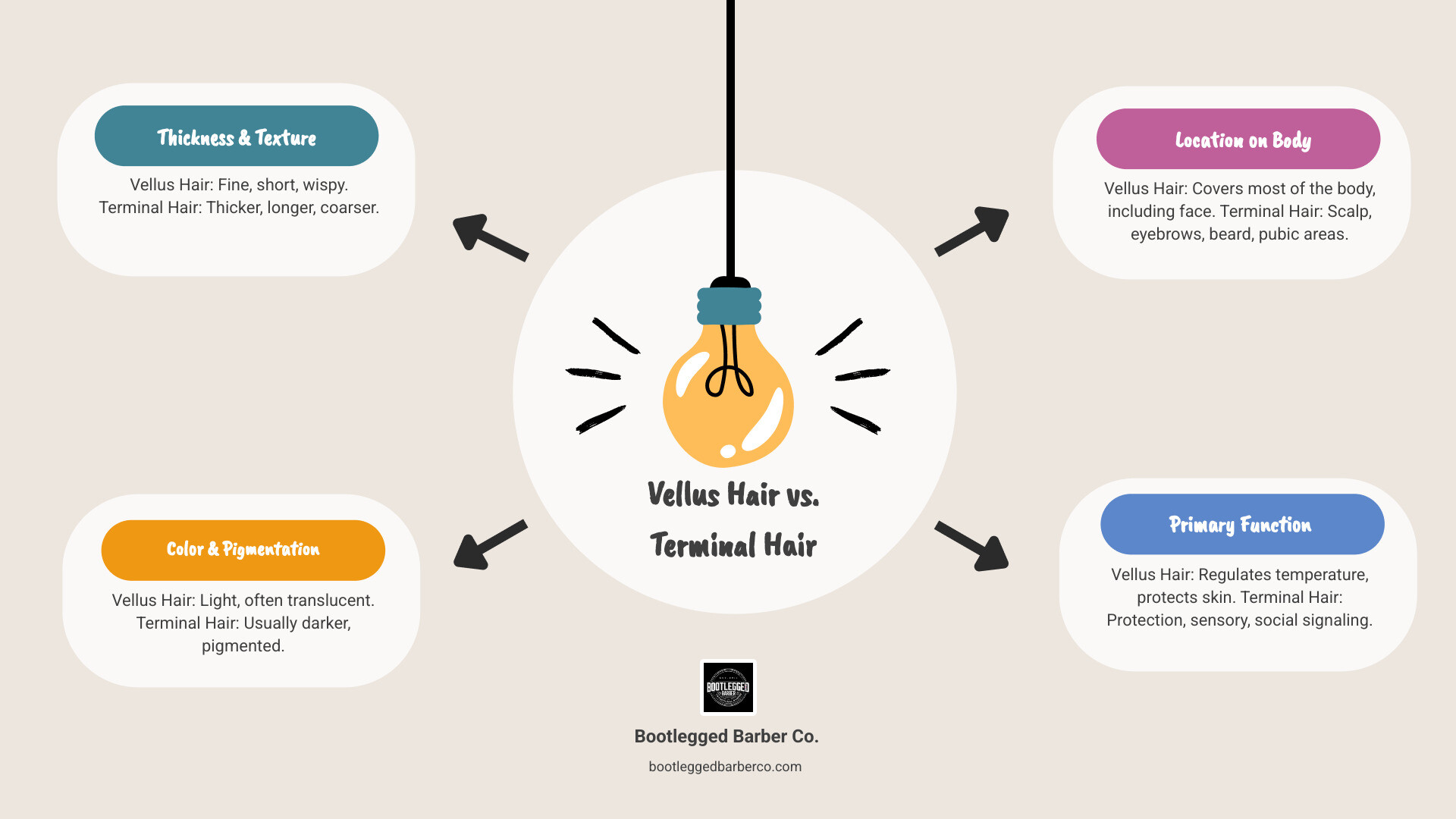
Peach fuzz facial hair is completely normal—it's the soft, fine hair that grows on nearly everyone's face. Technically called vellus hair, it's shorter, lighter, and softer than the thicker terminal hair on your scalp or eyebrows.
Quick Facts About Peach Fuzz:
- What it is: Vellus hair—fine, light-colored facial hair.
- Where it grows: Face, forehead, cheeks, upper lip, neck, and most of the body.
- Its purpose: Regulates body temperature, protects skin, and aids sensation.
- Removal: Optional and cosmetic; methods include shaving, dermaplaning, waxing, and laser.
- Growth myth: It does not grow back thicker or darker after removal.
Whether you want smoother skin for makeup or simply prefer the feel, the choice to remove it is personal. Some accept their natural texture, while others prefer a hair-free look.
I'm Connor Stone from Bootlegged Barber, and I've helped many clients with safe, effective approaches to managing peach fuzz facial hair. This guide covers everything from what peach fuzz is to the best removal methods for your skin and lifestyle.
What is Vellus Hair and What is its Purpose?
The soft, barely-there fuzz on your face is vellus hair, or peach fuzz facial hair. Unlike the thicker terminal hair on your scalp, vellus hair is fine, short, and often translucent.
Everyone has it, though its visibility varies with genetics and hormones. It covers most of the body—including the face, arms, and legs—but not the palms, soles, lips, or eyelids. For more details, the Cleveland Clinic has a great resource on Vellus Hair: What It Is, Function & Removal.
You might wonder why we have this fine hair. Vellus hair serves several important purposes for your body.
Temperature regulation is one of its main jobs. It provides a thin layer of insulation to help keep you warm and wicks moisture away from your skin to help cool you down.
It also acts as a protective barrier for your skin. That fine layer of hair helps shield you from environmental irritants and bacteria.
Finally, vellus hair plays a role in sensation. It helps you detect light touches and changes on your skin's surface. Your vellus hair is part of the response that causes goosebumps.
Here's something interesting: vellus hair doesn't stay the same your whole life. During puberty, hormones called androgens start ramping up in both males and females. These hormones can transform vellus hair in certain areas into terminal hair—the thicker, darker kind. That's why hair in your underarms and pubic area becomes coarser during your teen years.
For males especially, and some females too, androgens cause peach fuzz facial hair on the upper lip and chin to darken and thicken. You might also notice this change on the chest, back, arms, and legs. It's all part of your body's natural development, showing just how adaptable our hair really is.
A Complete Guide to Removing Peach Fuzz Facial Hair
Deciding whether to remove peach fuzz facial hair is entirely up to you. Some people love the smooth canvas it creates for makeup, while others simply prefer the feel of hair-free skin. Whatever your motivation, you've got plenty of options—from quick DIY fixes you can do at home to professional treatments that deliver longer-lasting results.
The key is finding what works for your lifestyle, your skin's sensitivity, and your budget. Are you looking for something fast and easy for everyday maintenance? Or would you rather invest in a treatment that keeps you smooth for weeks at a time? Let's walk through your choices.
Here's a quick comparison to help you get your bearings:
| Method | Best For | Longevity | Pain Level | Avg. Cost (Estimate) |
|---|---|---|---|---|
| Dry Shaving | Quick, daily removal | 1-2 days | Low | Low |
| Dermaplaning (at-home) | Exfoliation & hair removal | 1-2 weeks | Low | Low-Moderate |
| Depilatory Creams | Painless, below-surface removal | 3-5 days | Low | Low |
| Waxing | Longer-lasting, hair from root | 2-4 weeks | Moderate-High | Moderate |
| Sugaring | Longer-lasting, hair from root, gentler | 2-4 weeks | Moderate | Moderate |
| Threading | Precise, hair from root | Up to 5 weeks | Moderate-High | Moderate |
| Dermaplaning (pro) | Exfoliation & hair removal, professional | 2-4 weeks | Low | High |
| Laser Hair Removal | Long-term reduction | Months to Years | Moderate | High (per session) |
| Electrolysis | Permanent hair removal | Permanent | Moderate-High | Very High (per session) |
At-Home Methods for Removing Peach Fuzz Facial Hair
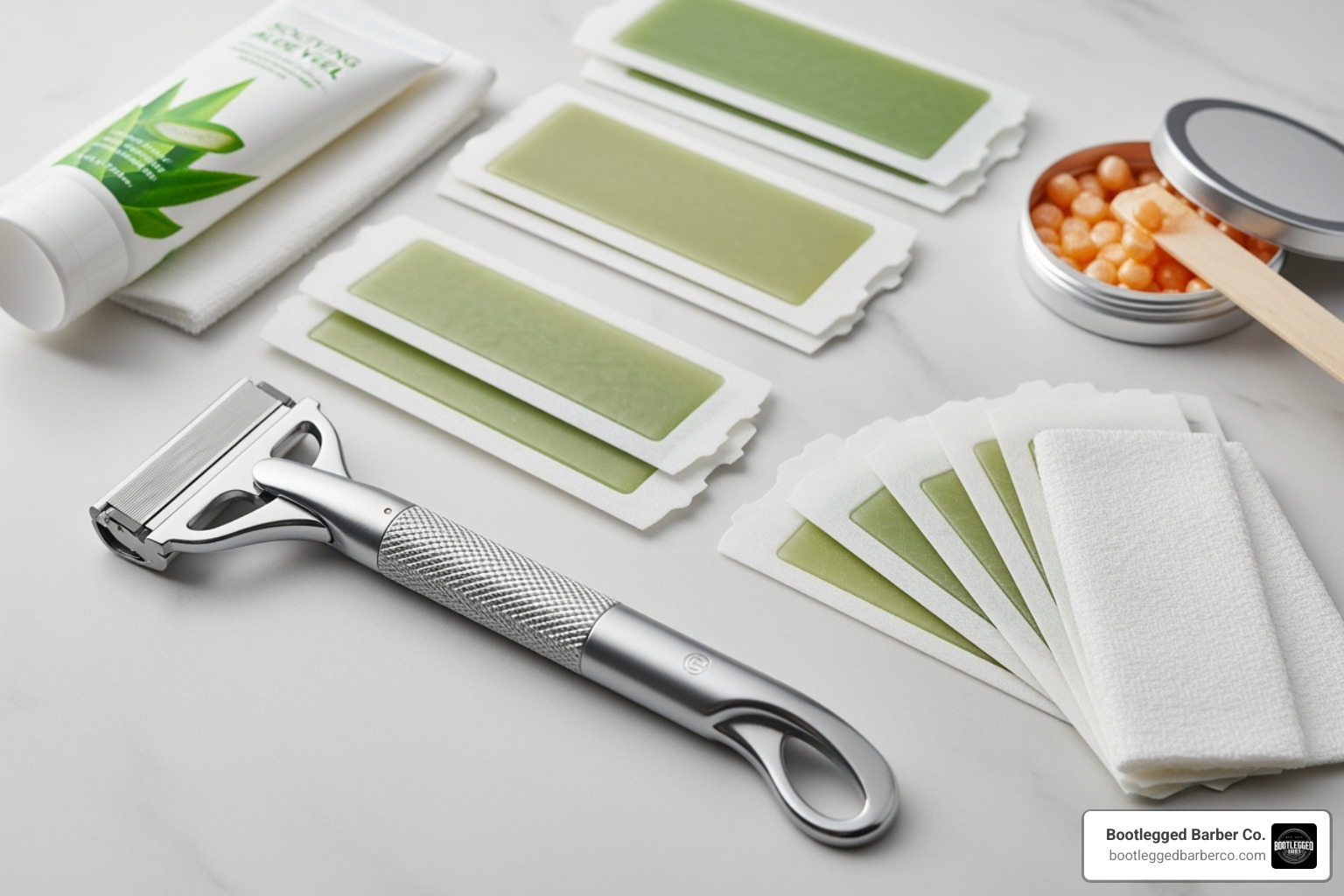
At-home methods are convenient, affordable, and effective for managing peach fuzz facial hair, making them popular for regular maintenance.
Dry shaving is probably the most straightforward option. It's exactly what it sounds like: using a razor on dry skin to remove surface hair. Because you're only cutting the hair at skin level, you'll need to shave frequently—often daily—to maintain that smooth feel. For facial peach fuzz, skip the big multi-blade razors you'd use on your legs. Instead, reach for a smaller electric razor or a dedicated facial razor designed for delicate skin. This reduces your risk of nicks and irritation. The downside? Daily shaving can lead to razor burn, cuts, and ingrown hairs if you're not careful. If you want to experience what a truly close, professional shave feels like, check out more info about a professional shave at Bootlegged Barber Co.
At-home dermaplaning has become a beauty world favorite for creating a flawless makeup base. This method uses a small, single-blade tool to gently scrape away vellus hairs and dead skin cells in one go. The result? Baby-smooth skin and a gentle exfoliation that helps your skincare products absorb better. It's painless when done correctly, but those blades are sharp, so a light touch is essential. Always work on clean, dry skin, hold the blade at a 45-degree angle, and glide downward. Replace your blades regularly to keep things hygienic and effective.
Depilatory creams offer a completely painless alternative. These face-specific creams use chemicals like thioglycolate to break down the keratin in your hair, weakening it enough that you can simply wipe it away below the skin's surface. The whole process takes about five to ten minutes, and there's no risk of cuts. The catch? You absolutely must use a product formulated for facial skin—body depilatories are too harsh and can cause burns. Always do a patch test on a small area at least 24 hours before applying it to your whole face. If you feel any burning or stinging, rinse immediately and stop using the product.
While convenient and cost-effective, at-home methods have trade-offs. Results are shorter-lived, there's a learning curve with dermaplaning, and creams can be messy. Still, they offer a good balance of effort and results for many.
Professional Treatments for Smoother Skin
For longer-lasting results, professional treatments performed by trained providers are worth considering. They offer smoother skin for weeks at a time.
Professional dermaplaning takes the at-home version to the next level. A licensed provider uses a sterile surgical scalpel to methodically remove vellus hairs and exfoliate dead skin cells. It's considered safe for most skin types and creates an incredibly smooth canvas for makeup. However, you'll want to avoid this if you have sensitive skin, a compromised skin barrier, or active acne, as it can make those conditions worse.
Waxing and sugaring are two sides of the same coin. Both involve applying a warm paste to your skin, pressing a strip over it, and quickly pulling it off to remove hair from the root. Because the hair is yanked out at the follicle, you'll stay smooth for two to four weeks. Sugaring is often considered gentler because the sugar paste sticks more to hair than skin, but both methods can cause some pain, redness, and potential ingrown hairs. If you're using retinol, antibiotics, or prescription acne medications, skip waxing and sugaring—these treatments can make your skin more fragile. For those curious about the precision and artistry of facial waxing, we've got more details on how to enhance your appearance with precision facial waxing.
Threading is an ancient technique that originated in India and uses twisted cotton threads to pluck out unwanted hairs with impressive precision. It's fantastic for eyebrow shaping but equally effective for removing peach fuzz facial hair. Results can last up to 5 weeks, making it one of the longer-lasting temporary methods. The key is finding a skilled professional—improper technique can lead to pain and ingrown hairs. Expect a bit of discomfort, but most find the precision and longevity worth it.
No matter which professional treatment you choose, make sure you're working with a licensed, experienced provider. They should assess your skin type, explain potential risks, and answer all your questions. Don't be shy about asking for certifications or checking reviews—your skin deserves the best care.
Long-Term and Permanent Hair Removal Solutions
If you're tired of constant maintenance or dealing with more noticeable peach fuzz facial hair, long-term reduction or permanent removal might be your answer. These methods require more investment upfront, but they can dramatically reduce how often you need to think about hair removal.
Laser hair removal uses concentrated light to target the melanin (pigment) in your hair follicles. The light heats and damages the follicle, which delays future hair growth for months or even years. When hair does grow back, it's usually finer and sparser. Here's the catch: laser therapy works best on darker hair because it needs pigment to target. If your peach fuzz facial hair is light blonde, grey, or white, laser won't be very effective. You'll need multiple sessions to see results, and side effects can include temporary redness, irritation, or changes in skin pigmentation—especially for darker skin tones. Choosing a skilled, experienced practitioner is crucial.
Electrolysis is the only method considered truly permanent. A trained electrologist inserts a very fine probe into each individual hair follicle and delivers a small electric current that destroys the root. It's meticulous work that requires numerous sessions and a significant investment of both time and money. But unlike laser, electrolysis works on all hair colors and skin types, making it incredibly versatile. If you have darker skin, make sure you're working with an electrologist who has experience with different skin tones to minimize risks and maximize results.

Methods to Approach with Caution
Not every hair removal method is created equal, and some can do more harm than good—especially on the delicate skin of your face. Here are a few approaches to either avoid or handle with extreme care.
Bleaching lightens the color of your peach fuzz facial hair instead of removing it. While this can make hair less noticeable, at-home bleaching kits are risky for facial use. They can accidentally lighten your skin tone instead of just your hair, creating uneven pigmentation that's tough to reverse. This is particularly noticeable on darker skin tones. Even professional bleaching solutions, which doctors sometimes use to correct hyperpigmentation, should only be handled by trained professionals. Body bleaching isn't safe either, as it can damage your skin.
Plucking works great for stray eyebrow hairs, but it's impractical for peach fuzz facial hair. Vellus hairs are too fine and numerous to make tweezing worthwhile. Plus, repeatedly plucking the same follicles can stimulate blood flow to the area, potentially causing hair to grow back thicker and stronger over time. It's tedious, time-consuming, and counterproductive.
Body depilatories on your face are a hard no. These creams are formulated with stronger chemicals than facial versions, and using them on delicate facial skin can cause severe irritation, chemical burns, and painful reactions. Always double-check that any depilatory cream you use is specifically labeled for facial use, and never skip the patch test.
Wet shaving with multi-blade razors might work fine on your legs, but it's not ideal for your face. The delicate skin and contours of your face make multi-blade razors risky for cuts, nicks, and irritation. Stick with a smaller electric razor or a single-blade facial razor designed for sensitive skin. And no matter what type of razor you use, proper post shave care is essential to prevent irritation and keep your skin healthy and happy.
When to See a Doctor About Facial Hair
While peach fuzz facial hair is normal, significant changes in your facial hair can signal an important health issue. A few random dark hairs are common, but it's worth paying attention if something seems off.
For women, the growth of thick, coarse hair in places where men typically grow it (like the chin, chest, or back) is called hirsutism. Affecting 5-10% of women of childbearing age, it usually points to a hormonal imbalance, such as high levels of androgens (male hormones).
Here's when you should call your doctor.
Sudden changes in your hair growth are the biggest red flag. If your soft peach fuzz facial hair suddenly transforms into something coarser and darker, or if you notice hair sprouting in completely new areas, that's your cue to get it checked out. Hair doesn't typically change its behavior overnight without a reason.
Signs of hormonal imbalance often show up as excessive facial hair growth, especially when it's thick and coarse rather than fine and soft. The most common culprit behind this is Polycystic Ovary Syndrome (PCOS), but other conditions like Cushing syndrome, androgen-secreting tumors, or congenital adrenal hyperplasia can also be at play.
Accompanying symptoms are equally important to notice. If your increased facial hair comes along with other changes in your body, that's a strong signal something hormonal might be going on. Watch for new or worsening acne, irregular periods or missed periods altogether, a deepening voice, unexplained weight gain (especially around your belly), increased muscle mass, high blood pressure, or thinning hair on your scalp in a male pattern.
There's also a condition called hypertrichosis, which is different from hirsutism. This involves excessive hair growth that's not related to androgens—it can be soft vellus hair or thicker hair growing in areas that aren't typically androgen-sensitive. Hypertrichosis might be connected to conditions like hypothyroidism, anorexia, or certain medications like Minoxidil.
If any of this sounds familiar or you're simply concerned about changes in your facial hair, don't brush it off. A board-certified dermatologist or your OBGYN can evaluate what's happening, diagnose any underlying conditions, and walk you through treatment options. Catching these things early can prevent bigger health issues down the road and help you manage unwanted hair growth effectively.
Frequently Asked Questions about Peach Fuzz Removal
We hear a lot of questions about peach fuzz facial hair and its removal at Bootlegged Barber Co. Let's clear up some common misconceptions and give you the straight answers you're looking for.
Does peach fuzz grow back thicker if removed?
No, peach fuzz does not grow back thicker, darker, or coarser if removed. This is a persistent myth, but it's not true. Your hair's color, thickness, and growth rate are determined by your genetics and hormones, not by whether you shave, wax, or thread it.
The myth comes from perception. When you shave or dermaplane, you're cutting the hair at its widest point, which leaves a blunt tip. As this hair grows back, that blunt tip can feel coarser or appear darker because it lacks the naturally soft, tapered end of virgin hair. Once the hair grows out a bit, it softens and returns to its original texture. It's an optical illusion, not actual thicker growth.
The Cleveland Clinic explains hair regrowth by stating that "Plucking, waxing, or shaving peach fuzz on the face won't change the color or the diameter of your hair—both of those characteristics are determined by your genetics." In fact, methods that remove hair from the root, like waxing, sugaring, or threading, can sometimes lead to hair growing back finer and thinner over time due to repeated trauma to the follicle.
Who is a good candidate for dermaplaning?
Dermaplaning provides smooth skin, but it's not for everyone. Knowing if you're a good candidate can prevent irritation.
You're likely a good candidate for dermaplaning if you have non-sensitive, resilient skin that tolerates exfoliation well. People with oilier or more robust skin often respond well to dermaplaning. If your peach fuzz facial hair is dark enough to be noticeable but too fine for laser hair removal to target effectively, dermaplaning can be an excellent solution. Many people also choose it purely for the aesthetic benefit of creating a smoother canvas for foundation and other makeup products.
You should avoid dermaplaning if you have sensitive skin that easily reacts to products or treatments. The physical exfoliation can cause redness, irritation, or compromise your skin barrier. If you're dealing with active acne or breakouts, dermaplaning can spread bacteria across your face, worsen inflammation, and potentially lead to scarring. Conditions like rosacea, eczema, psoriasis, or any inflammatory skin issue make your skin barrier fragile and easily irritated, making dermaplaning unsuitable.
It's also important to avoid dermaplaning if you have a compromised skin barrier—if your skin feels tight, dry, flaky, or is recovering from a chemical peel or other intensive treatment. Give your skin time to heal first. Additionally, if you're using retinoids, strong exfoliants, or certain medications that thin your skin, you're at higher risk for damage from dermaplaning.
When in doubt, always consult with a dermatologist or a qualified skincare professional before trying dermaplaning, especially if you have existing skin concerns.
Is it better to shave or wax peach fuzz?
The honest answer? There's no universal "better" method between shaving and waxing for peach fuzz facial hair. It really comes down to your personal preferences, your skin type, and what kind of results you're looking for.
Let's talk about shaving first, whether that's dry shaving or using dermaplaning razors. The biggest advantage is that it's quick and painless. You can do it at home in minutes, and when done correctly, there's no discomfort. Facial razors also provide gentle exfoliation by removing dead skin cells along with the hair, leaving your skin smooth and glowing. Plus, razors are inexpensive, making this a budget-friendly option. The downside? Results are short-lived. Hair grows back quickly, often within one to two days, so you'll need frequent touch-ups. There's also a risk of nicks, cuts, razor burn, or ingrown hairs if you're not careful, since shaving only cuts hair at the surface rather than removing it from the root.
Waxing, on the other hand, offers much longer-lasting results because it removes hair from the root. Your skin can stay smooth for two to four weeks, and over time, some people notice their hair grows back finer and sparser. The finish is incredibly smooth since the hair is removed entirely. However, waxing comes with its own challenges. It can be painful—pulling hair from the root isn't exactly a comfortable experience. There's also a risk of redness, bumps, or even bruising, especially on sensitive facial skin. If you're using certain medications or your skin is fragile, there's even a risk of the wax lifting your skin. Waxing is also more expensive than shaving, particularly for professional services, and you have to let your hair grow to a certain length before you can wax again, which means dealing with an awkward "in-between" period.
Our take? For quick, painless removal and gentle exfoliation, especially if you have light peach fuzz facial hair, shaving with a dermaplaning-style facial razor is a great at-home option. For longer-lasting smoothness and potentially finer regrowth, waxing or sugaring can be effective, but we highly recommend professional services for facial waxing to minimize risks and ensure proper technique. If you're interested in exploring professional options, check out how to Enhance Your Appearance With Precision Facial Waxing. The "better" choice ultimately depends on your tolerance for pain, your budget, how often you want to remove hair, and what your skin specifically needs.
Conclusion
Now you know that peach fuzz facial hair (vellus hair) is natural and serves several purposes. Whether you remove it is a personal choice, and there's no right or wrong answer.
What matters most is finding an approach that fits your lifestyle, your skin type, and your personal comfort level. Maybe you're drawn to the convenience of at-home shaving or dermaplaning for a quick refresh before a big event. Perhaps you prefer the longer-lasting smoothness that comes from professional waxing, threading, or sugaring. Or maybe you're ready to invest in laser hair removal or electrolysis for a more permanent solution. Each method has its place, and the "best" one is simply the one that works for you.
The old myth about hair growing back thicker after removal? It's been thoroughly debunked. Your hair's texture, color, and growth patterns are determined by your genetics and hormones—not by your razor or wax strip. So experiment with different methods without worrying about making your peach fuzz facial hair worse.
It's also important to listen to your body. If you notice sudden changes in facial hair growth or other symptoms like irregular periods or persistent acne, don't brush it off. These can be signs of hormonal imbalances that deserve medical attention. Your health always comes first.
At Bootlegged Barber Co., we're passionate about helping our clients feel confident and well-groomed. While we specialize in traditional barbering techniques, we understand that grooming is personal, and we're here to support you in whatever choices you make for your skin and appearance. Our skilled barbers bring expertise, precision, and a genuine commitment to quality service in a welcoming, community-focused environment.
Ready to experience professional grooming that prioritizes your needs? Whether you're looking for a classic shave, a fresh cut, or advice on managing your facial hair, we'd love to help. Book your professional grooming service today and find what traditional craftsmanship and modern care can do for you.
Understanding Facial Peach Fuzz and Your Options
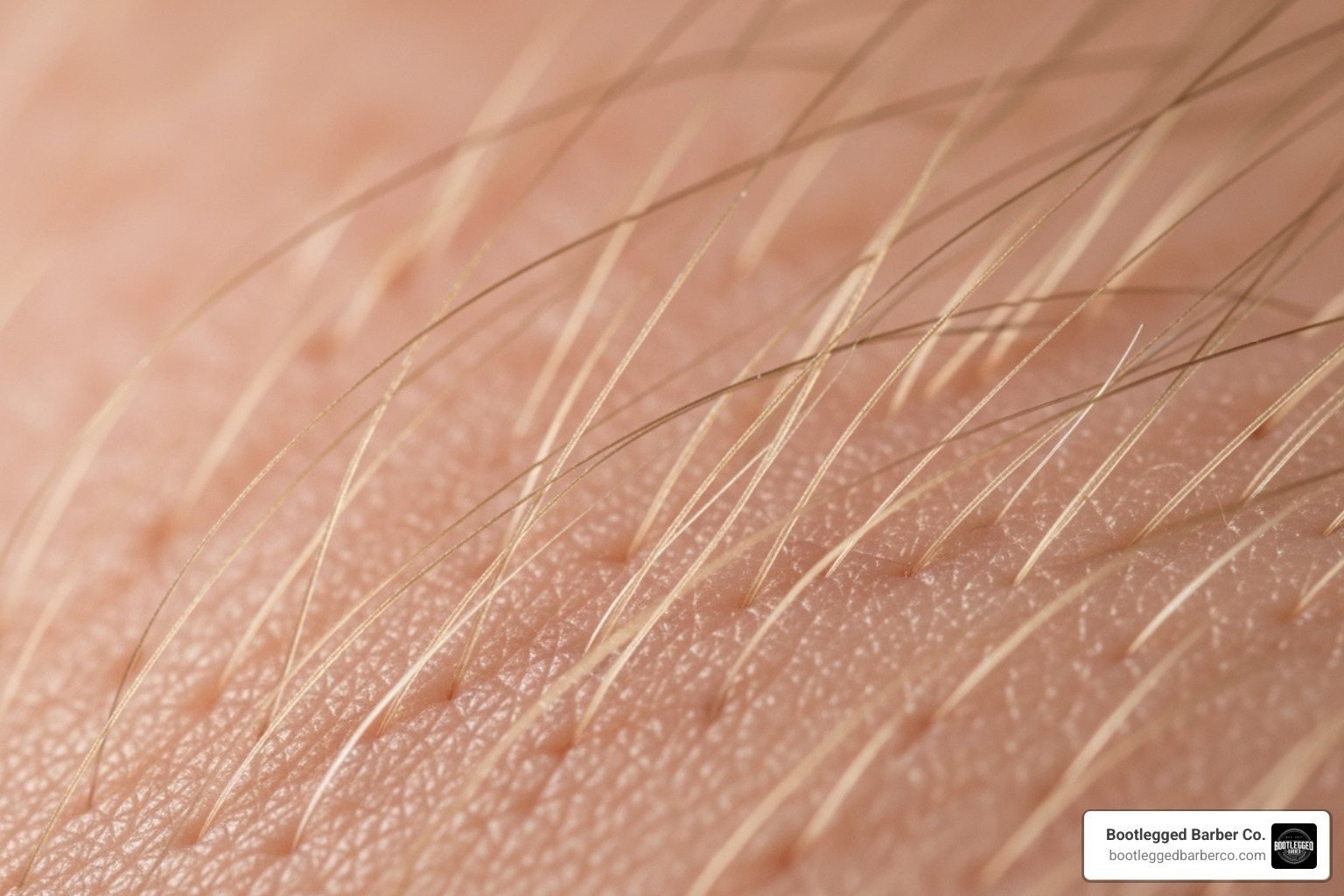
Peach fuzz facial hair is completely normal—it's the soft, fine hair that grows on nearly everyone's face. Technically called vellus hair, it's shorter, lighter, and softer than the thicker terminal hair on your scalp or eyebrows.
Quick Facts About Peach Fuzz:
- What it is: Vellus hair—fine, light-colored facial hair.
- Where it grows: Face, forehead, cheeks, upper lip, neck, and most of the body.
- Its purpose: Regulates body temperature, protects skin, and aids sensation.
- Removal: Optional and cosmetic; methods include shaving, dermaplaning, waxing, and laser.
- Growth myth: It does not grow back thicker or darker after removal.
Whether you want smoother skin for makeup or simply prefer the feel, the choice to remove it is personal. Some accept their natural texture, while others prefer a hair-free look.
I'm Connor Stone from Bootlegged Barber, and I've helped many clients with safe, effective approaches to managing peach fuzz facial hair. This guide covers everything from what peach fuzz is to the best removal methods for your skin and lifestyle.
What is Vellus Hair and What is its Purpose?
The soft, barely-there fuzz on your face is vellus hair, or peach fuzz facial hair. Unlike the thicker terminal hair on your scalp, vellus hair is fine, short, and often translucent.
Everyone has it, though its visibility varies with genetics and hormones. It covers most of the body—including the face, arms, and legs—but not the palms, soles, lips, or eyelids. For more details, the Cleveland Clinic has a great resource on Vellus Hair: What It Is, Function & Removal.
You might wonder why we have this fine hair. Vellus hair serves several important purposes for your body.
Temperature regulation is one of its main jobs. It provides a thin layer of insulation to help keep you warm and wicks moisture away from your skin to help cool you down.
It also acts as a protective barrier for your skin. That fine layer of hair helps shield you from environmental irritants and bacteria.
Finally, vellus hair plays a role in sensation. It helps you detect light touches and changes on your skin's surface. Your vellus hair is part of the response that causes goosebumps.
Here's something interesting: vellus hair doesn't stay the same your whole life. During puberty, hormones called androgens start ramping up in both males and females. These hormones can transform vellus hair in certain areas into terminal hair—the thicker, darker kind. That's why hair in your underarms and pubic area becomes coarser during your teen years.
For males especially, and some females too, androgens cause peach fuzz facial hair on the upper lip and chin to darken and thicken. You might also notice this change on the chest, back, arms, and legs. It's all part of your body's natural development, showing just how adaptable our hair really is.
A Complete Guide to Removing Peach Fuzz Facial Hair
Deciding whether to remove peach fuzz facial hair is entirely up to you. Some people love the smooth canvas it creates for makeup, while others simply prefer the feel of hair-free skin. Whatever your motivation, you've got plenty of options—from quick DIY fixes you can do at home to professional treatments that deliver longer-lasting results.
The key is finding what works for your lifestyle, your skin's sensitivity, and your budget. Are you looking for something fast and easy for everyday maintenance? Or would you rather invest in a treatment that keeps you smooth for weeks at a time? Let's walk through your choices.
Here's a quick comparison to help you get your bearings:
| Method | Best For | Longevity | Pain Level | Avg. Cost (Estimate) |
|---|---|---|---|---|
| Dry Shaving | Quick, daily removal | 1-2 days | Low | Low |
| Dermaplaning (at-home) | Exfoliation & hair removal | 1-2 weeks | Low | Low-Moderate |
| Depilatory Creams | Painless, below-surface removal | 3-5 days | Low | Low |
| Waxing | Longer-lasting, hair from root | 2-4 weeks | Moderate-High | Moderate |
| Sugaring | Longer-lasting, hair from root, gentler | 2-4 weeks | Moderate | Moderate |
| Threading | Precise, hair from root | Up to 5 weeks | Moderate-High | Moderate |
| Dermaplaning (pro) | Exfoliation & hair removal, professional | 2-4 weeks | Low | High |
| Laser Hair Removal | Long-term reduction | Months to Years | Moderate | High (per session) |
| Electrolysis | Permanent hair removal | Permanent | Moderate-High | Very High (per session) |
At-Home Methods for Removing Peach Fuzz Facial Hair
At-home methods are convenient, affordable, and effective for managing peach fuzz facial hair, making them popular for regular maintenance.
Dry shaving is probably the most straightforward option. It's exactly what it sounds like: using a razor on dry skin to remove surface hair. Because you're only cutting the hair at skin level, you'll need to shave frequently—often daily—to maintain that smooth feel. For facial peach fuzz, skip the big multi-blade razors you'd use on your legs. Instead, reach for a smaller electric razor or a dedicated facial razor designed for delicate skin. This reduces your risk of nicks and irritation. The downside? Daily shaving can lead to razor burn, cuts, and ingrown hairs if you're not careful. If you want to experience what a truly close, professional shave feels like, check out more info about a professional shave at Bootlegged Barber Co.
At-home dermaplaning has become a beauty world favorite for creating a flawless makeup base. This method uses a small, single-blade tool to gently scrape away vellus hairs and dead skin cells in one go. The result? Baby-smooth skin and a gentle exfoliation that helps your skincare products absorb better. It's painless when done correctly, but those blades are sharp, so a light touch is essential. Always work on clean, dry skin, hold the blade at a 45-degree angle, and glide downward. Replace your blades regularly to keep things hygienic and effective.
Depilatory creams offer a completely painless alternative. These face-specific creams use chemicals like thioglycolate to break down the keratin in your hair, weakening it enough that you can simply wipe it away below the skin's surface. The whole process takes about five to ten minutes, and there's no risk of cuts. The catch? You absolutely must use a product formulated for facial skin—body depilatories are too harsh and can cause burns. Always do a patch test on a small area at least 24 hours before applying it to your whole face. If you feel any burning or stinging, rinse immediately and stop using the product.
While convenient and cost-effective, at-home methods have trade-offs. Results are shorter-lived, there's a learning curve with dermaplaning, and creams can be messy. Still, they offer a good balance of effort and results for many.
Professional Treatments for Smoother Skin
For longer-lasting results, professional treatments performed by trained providers are worth considering. They offer smoother skin for weeks at a time.
Professional dermaplaning takes the at-home version to the next level. A licensed provider uses a sterile surgical scalpel to methodically remove vellus hairs and exfoliate dead skin cells. It's considered safe for most skin types and creates an incredibly smooth canvas for makeup. However, you'll want to avoid this if you have sensitive skin, a compromised skin barrier, or active acne, as it can make those conditions worse.
Waxing and sugaring are two sides of the same coin. Both involve applying a warm paste to your skin, pressing a strip over it, and quickly pulling it off to remove hair from the root. Because the hair is yanked out at the follicle, you'll stay smooth for two to four weeks. Sugaring is often considered gentler because the sugar paste sticks more to hair than skin, but both methods can cause some pain, redness, and potential ingrown hairs. If you're using retinol, antibiotics, or prescription acne medications, skip waxing and sugaring—these treatments can make your skin more fragile. For those curious about the precision and artistry of facial waxing, we've got more details on how to enhance your appearance with precision facial waxing.
Threading is an ancient technique that originated in India and uses twisted cotton threads to pluck out unwanted hairs with impressive precision. It's fantastic for eyebrow shaping but equally effective for removing peach fuzz facial hair. Results can last up to 5 weeks, making it one of the longer-lasting temporary methods. The key is finding a skilled professional—improper technique can lead to pain and ingrown hairs. Expect a bit of discomfort, but most find the precision and longevity worth it.
No matter which professional treatment you choose, make sure you're working with a licensed, experienced provider. They should assess your skin type, explain potential risks, and answer all your questions. Don't be shy about asking for certifications or checking reviews—your skin deserves the best care.
Long-Term and Permanent Hair Removal Solutions
If you're tired of constant maintenance or dealing with more noticeable peach fuzz facial hair, long-term reduction or permanent removal might be your answer. These methods require more investment upfront, but they can dramatically reduce how often you need to think about hair removal.
Laser hair removal uses concentrated light to target the melanin (pigment) in your hair follicles. The light heats and damages the follicle, which delays future hair growth for months or even years. When hair does grow back, it's usually finer and sparser. Here's the catch: laser therapy works best on darker hair because it needs pigment to target. If your peach fuzz facial hair is light blonde, grey, or white, laser won't be very effective. You'll need multiple sessions to see results, and side effects can include temporary redness, irritation, or changes in skin pigmentation—especially for darker skin tones. Choosing a skilled, experienced practitioner is crucial.
Electrolysis is the only method considered truly permanent. A trained electrologist inserts a very fine probe into each individual hair follicle and delivers a small electric current that destroys the root. It's meticulous work that requires numerous sessions and a significant investment of both time and money. But unlike laser, electrolysis works on all hair colors and skin types, making it incredibly versatile. If you have darker skin, make sure you're working with an electrologist who has experience with different skin tones to minimize risks and maximize results.
Methods to Approach with Caution
Not every hair removal method is created equal, and some can do more harm than good—especially on the delicate skin of your face. Here are a few approaches to either avoid or handle with extreme care.
Bleaching lightens the color of your peach fuzz facial hair instead of removing it. While this can make hair less noticeable, at-home bleaching kits are risky for facial use. They can accidentally lighten your skin tone instead of just your hair, creating uneven pigmentation that's tough to reverse. This is particularly noticeable on darker skin tones. Even professional bleaching solutions, which doctors sometimes use to correct hyperpigmentation, should only be handled by trained professionals. Body bleaching isn't safe either, as it can damage your skin.
Plucking works great for stray eyebrow hairs, but it's impractical for peach fuzz facial hair. Vellus hairs are too fine and numerous to make tweezing worthwhile. Plus, repeatedly plucking the same follicles can stimulate blood flow to the area, potentially causing hair to grow back thicker and stronger over time. It's tedious, time-consuming, and counterproductive.
Body depilatories on your face are a hard no. These creams are formulated with stronger chemicals than facial versions, and using them on delicate facial skin can cause severe irritation, chemical burns, and painful reactions. Always double-check that any depilatory cream you use is specifically labeled for facial use, and never skip the patch test.
Wet shaving with multi-blade razors might work fine on your legs, but it's not ideal for your face. The delicate skin and contours of your face make multi-blade razors risky for cuts, nicks, and irritation. Stick with a smaller electric razor or a single-blade facial razor designed for sensitive skin. And no matter what type of razor you use, proper post shave care is essential to prevent irritation and keep your skin healthy and happy.
When to See a Doctor About Facial Hair
While peach fuzz facial hair is normal, significant changes in your facial hair can signal an important health issue. A few random dark hairs are common, but it's worth paying attention if something seems off.
For women, the growth of thick, coarse hair in places where men typically grow it (like the chin, chest, or back) is called hirsutism. Affecting 5-10% of women of childbearing age, it usually points to a hormonal imbalance, such as high levels of androgens (male hormones).
Here's when you should call your doctor.
Sudden changes in your hair growth are the biggest red flag. If your soft peach fuzz facial hair suddenly transforms into something coarser and darker, or if you notice hair sprouting in completely new areas, that's your cue to get it checked out. Hair doesn't typically change its behavior overnight without a reason.
Signs of hormonal imbalance often show up as excessive facial hair growth, especially when it's thick and coarse rather than fine and soft. The most common culprit behind this is Polycystic Ovary Syndrome (PCOS), but other conditions like Cushing syndrome, androgen-secreting tumors, or congenital adrenal hyperplasia can also be at play.
Accompanying symptoms are equally important to notice. If your increased facial hair comes along with other changes in your body, that's a strong signal something hormonal might be going on. Watch for new or worsening acne, irregular periods or missed periods altogether, a deepening voice, unexplained weight gain (especially around your belly), increased muscle mass, high blood pressure, or thinning hair on your scalp in a male pattern.
There's also a condition called hypertrichosis, which is different from hirsutism. This involves excessive hair growth that's not related to androgens—it can be soft vellus hair or thicker hair growing in areas that aren't typically androgen-sensitive. Hypertrichosis might be connected to conditions like hypothyroidism, anorexia, or certain medications like Minoxidil.
If any of this sounds familiar or you're simply concerned about changes in your facial hair, don't brush it off. A board-certified dermatologist or your OBGYN can evaluate what's happening, diagnose any underlying conditions, and walk you through treatment options. Catching these things early can prevent bigger health issues down the road and help you manage unwanted hair growth effectively.
Frequently Asked Questions about Peach Fuzz Removal
We hear a lot of questions about peach fuzz facial hair and its removal at Bootlegged Barber Co. Let's clear up some common misconceptions and give you the straight answers you're looking for.
Does peach fuzz grow back thicker if removed?
No, peach fuzz does not grow back thicker, darker, or coarser if removed. This is a persistent myth, but it's not true. Your hair's color, thickness, and growth rate are determined by your genetics and hormones, not by whether you shave, wax, or thread it.
The myth comes from perception. When you shave or dermaplane, you're cutting the hair at its widest point, which leaves a blunt tip. As this hair grows back, that blunt tip can feel coarser or appear darker because it lacks the naturally soft, tapered end of virgin hair. Once the hair grows out a bit, it softens and returns to its original texture. It's an optical illusion, not actual thicker growth.
The Cleveland Clinic explains hair regrowth by stating that "Plucking, waxing, or shaving peach fuzz on the face won't change the color or the diameter of your hair—both of those characteristics are determined by your genetics." In fact, methods that remove hair from the root, like waxing, sugaring, or threading, can sometimes lead to hair growing back finer and thinner over time due to repeated trauma to the follicle.
Who is a good candidate for dermaplaning?
Dermaplaning provides smooth skin, but it's not for everyone. Knowing if you're a good candidate can prevent irritation.
You're likely a good candidate for dermaplaning if you have non-sensitive, resilient skin that tolerates exfoliation well. People with oilier or more robust skin often respond well to dermaplaning. If your peach fuzz facial hair is dark enough to be noticeable but too fine for laser hair removal to target effectively, dermaplaning can be an excellent solution. Many people also choose it purely for the aesthetic benefit of creating a smoother canvas for foundation and other makeup products.
You should avoid dermaplaning if you have sensitive skin that easily reacts to products or treatments. The physical exfoliation can cause redness, irritation, or compromise your skin barrier. If you're dealing with active acne or breakouts, dermaplaning can spread bacteria across your face, worsen inflammation, and potentially lead to scarring. Conditions like rosacea, eczema, psoriasis, or any inflammatory skin issue make your skin barrier fragile and easily irritated, making dermaplaning unsuitable.
It's also important to avoid dermaplaning if you have a compromised skin barrier—if your skin feels tight, dry, flaky, or is recovering from a chemical peel or other intensive treatment. Give your skin time to heal first. Additionally, if you're using retinoids, strong exfoliants, or certain medications that thin your skin, you're at higher risk for damage from dermaplaning.
When in doubt, always consult with a dermatologist or a qualified skincare professional before trying dermaplaning, especially if you have existing skin concerns.
Is it better to shave or wax peach fuzz?
The honest answer? There's no universal "better" method between shaving and waxing for peach fuzz facial hair. It really comes down to your personal preferences, your skin type, and what kind of results you're looking for.
Let's talk about shaving first, whether that's dry shaving or using dermaplaning razors. The biggest advantage is that it's quick and painless. You can do it at home in minutes, and when done correctly, there's no discomfort. Facial razors also provide gentle exfoliation by removing dead skin cells along with the hair, leaving your skin smooth and glowing. Plus, razors are inexpensive, making this a budget-friendly option. The downside? Results are short-lived. Hair grows back quickly, often within one to two days, so you'll need frequent touch-ups. There's also a risk of nicks, cuts, razor burn, or ingrown hairs if you're not careful, since shaving only cuts hair at the surface rather than removing it from the root.
Waxing, on the other hand, offers much longer-lasting results because it removes hair from the root. Your skin can stay smooth for two to four weeks, and over time, some people notice their hair grows back finer and sparser. The finish is incredibly smooth since the hair is removed entirely. However, waxing comes with its own challenges. It can be painful—pulling hair from the root isn't exactly a comfortable experience. There's also a risk of redness, bumps, or even bruising, especially on sensitive facial skin. If you're using certain medications or your skin is fragile, there's even a risk of the wax lifting your skin. Waxing is also more expensive than shaving, particularly for professional services, and you have to let your hair grow to a certain length before you can wax again, which means dealing with an awkward "in-between" period.
Our take? For quick, painless removal and gentle exfoliation, especially if you have light peach fuzz facial hair, shaving with a dermaplaning-style facial razor is a great at-home option. For longer-lasting smoothness and potentially finer regrowth, waxing or sugaring can be effective, but we highly recommend professional services for facial waxing to minimize risks and ensure proper technique. If you're interested in exploring professional options, check out how to Enhance Your Appearance With Precision Facial Waxing. The "better" choice ultimately depends on your tolerance for pain, your budget, how often you want to remove hair, and what your skin specifically needs.
Conclusion
Now you know that peach fuzz facial hair (vellus hair) is natural and serves several purposes. Whether you remove it is a personal choice, and there's no right or wrong answer.
What matters most is finding an approach that fits your lifestyle, your skin type, and your personal comfort level. Maybe you're drawn to the convenience of at-home shaving or dermaplaning for a quick refresh before a big event. Perhaps you prefer the longer-lasting smoothness that comes from professional waxing, threading, or sugaring. Or maybe you're ready to invest in laser hair removal or electrolysis for a more permanent solution. Each method has its place, and the "best" one is simply the one that works for you.
The old myth about hair growing back thicker after removal? It's been thoroughly debunked. Your hair's texture, color, and growth patterns are determined by your genetics and hormones—not by your razor or wax strip. So experiment with different methods without worrying about making your peach fuzz facial hair worse.
It's also important to listen to your body. If you notice sudden changes in facial hair growth or other symptoms like irregular periods or persistent acne, don't brush it off. These can be signs of hormonal imbalances that deserve medical attention. Your health always comes first.
At Bootlegged Barber Co., we're passionate about helping our clients feel confident and well-groomed. While we specialize in traditional barbering techniques, we understand that grooming is personal, and we're here to support you in whatever choices you make for your skin and appearance. Our skilled barbers bring expertise, precision, and a genuine commitment to quality service in a welcoming, community-focused environment.
Ready to experience professional grooming that prioritizes your needs? Whether you're looking for a classic shave, a fresh cut, or advice on managing your facial hair, we'd love to help. Book your professional grooming service today and find what traditional craftsmanship and modern care can do for you.

Understanding Facial Peach Fuzz and Your Options
Peach fuzz facial hair is completely normal—it's the soft, fine hair that grows on nearly everyone's face. Technically called vellus hair, it's shorter, lighter, and softer than the thicker terminal hair on your scalp or eyebrows.
Quick Facts About Peach Fuzz:
- What it is: Vellus hair—fine, light-colored facial hair.
- Where it grows: Face, forehead, cheeks, upper lip, neck, and most of the body.
- Its purpose: Regulates body temperature, protects skin, and aids sensation.
- Removal: Optional and cosmetic; methods include shaving, dermaplaning, waxing, and laser.
- Growth myth: It does not grow back thicker or darker after removal.
Whether you want smoother skin for makeup or simply prefer the feel, the choice to remove it is personal. Some accept their natural texture, while others prefer a hair-free look.
I'm Connor Stone from Bootlegged Barber, and I've helped many clients with safe, effective approaches to managing peach fuzz facial hair. This guide covers everything from what peach fuzz is to the best removal methods for your skin and lifestyle.
What is Vellus Hair and What is its Purpose?
The soft, barely-there fuzz on your face is vellus hair, or peach fuzz facial hair. Unlike the thicker terminal hair on your scalp, vellus hair is fine, short, and often translucent.
Everyone has it, though its visibility varies with genetics and hormones. It covers most of the body—including the face, arms, and legs—but not the palms, soles, lips, or eyelids. For more details, the Cleveland Clinic has a great resource on Vellus Hair: What It Is, Function & Removal.
You might wonder why we have this fine hair. Vellus hair serves several important purposes for your body.
Temperature regulation is one of its main jobs. It provides a thin layer of insulation to help keep you warm and wicks moisture away from your skin to help cool you down.
It also acts as a protective barrier for your skin. That fine layer of hair helps shield you from environmental irritants and bacteria.
Finally, vellus hair plays a role in sensation. It helps you detect light touches and changes on your skin's surface. Your vellus hair is part of the response that causes goosebumps.
Here's something interesting: vellus hair doesn't stay the same your whole life. During puberty, hormones called androgens start ramping up in both males and females. These hormones can transform vellus hair in certain areas into terminal hair—the thicker, darker kind. That's why hair in your underarms and pubic area becomes coarser during your teen years.
For males especially, and some females too, androgens cause peach fuzz facial hair on the upper lip and chin to darken and thicken. You might also notice this change on the chest, back, arms, and legs. It's all part of your body's natural development, showing just how adaptable our hair really is.
A Complete Guide to Removing Peach Fuzz Facial Hair
Deciding whether to remove peach fuzz facial hair is entirely up to you. Some people love the smooth canvas it creates for makeup, while others simply prefer the feel of hair-free skin. Whatever your motivation, you've got plenty of options—from quick DIY fixes you can do at home to professional treatments that deliver longer-lasting results.
The key is finding what works for your lifestyle, your skin's sensitivity, and your budget. Are you looking for something fast and easy for everyday maintenance? Or would you rather invest in a treatment that keeps you smooth for weeks at a time? Let's walk through your choices.
Here's a quick comparison to help you get your bearings:
| Method | Best For | Longevity | Pain Level | Avg. Cost (Estimate) |
|---|---|---|---|---|
| Dry Shaving | Quick, daily removal | 1-2 days | Low | Low |
| Dermaplaning (at-home) | Exfoliation & hair removal | 1-2 weeks | Low | Low-Moderate |
| Depilatory Creams | Painless, below-surface removal | 3-5 days | Low | Low |
| Waxing | Longer-lasting, hair from root | 2-4 weeks | Moderate-High | Moderate |
| Sugaring | Longer-lasting, hair from root, gentler | 2-4 weeks | Moderate | Moderate |
| Threading | Precise, hair from root | Up to 5 weeks | Moderate-High | Moderate |
| Dermaplaning (pro) | Exfoliation & hair removal, professional | 2-4 weeks | Low | High |
| Laser Hair Removal | Long-term reduction | Months to Years | Moderate | High (per session) |
| Electrolysis | Permanent hair removal | Permanent | Moderate-High | Very High (per session) |
At-Home Methods for Removing Peach Fuzz Facial Hair
At-home methods are convenient, affordable, and effective for managing peach fuzz facial hair, making them popular for regular maintenance.
Dry shaving is probably the most straightforward option. It's exactly what it sounds like: using a razor on dry skin to remove surface hair. Because you're only cutting the hair at skin level, you'll need to shave frequently—often daily—to maintain that smooth feel. For facial peach fuzz, skip the big multi-blade razors you'd use on your legs. Instead, reach for a smaller electric razor or a dedicated facial razor designed for delicate skin. This reduces your risk of nicks and irritation. The downside? Daily shaving can lead to razor burn, cuts, and ingrown hairs if you're not careful. If you want to experience what a truly close, professional shave feels like, check out more info about a professional shave at Bootlegged Barber Co.
At-home dermaplaning has become a beauty world favorite for creating a flawless makeup base. This method uses a small, single-blade tool to gently scrape away vellus hairs and dead skin cells in one go. The result? Baby-smooth skin and a gentle exfoliation that helps your skincare products absorb better. It's painless when done correctly, but those blades are sharp, so a light touch is essential. Always work on clean, dry skin, hold the blade at a 45-degree angle, and glide downward. Replace your blades regularly to keep things hygienic and effective.
Depilatory creams offer a completely painless alternative. These face-specific creams use chemicals like thioglycolate to break down the keratin in your hair, weakening it enough that you can simply wipe it away below the skin's surface. The whole process takes about five to ten minutes, and there's no risk of cuts. The catch? You absolutely must use a product formulated for facial skin—body depilatories are too harsh and can cause burns. Always do a patch test on a small area at least 24 hours before applying it to your whole face. If you feel any burning or stinging, rinse immediately and stop using the product.
While convenient and cost-effective, at-home methods have trade-offs. Results are shorter-lived, there's a learning curve with dermaplaning, and creams can be messy. Still, they offer a good balance of effort and results for many.
Professional Treatments for Smoother Skin
For longer-lasting results, professional treatments performed by trained providers are worth considering. They offer smoother skin for weeks at a time.
Professional dermaplaning takes the at-home version to the next level. A licensed provider uses a sterile surgical scalpel to methodically remove vellus hairs and exfoliate dead skin cells. It's considered safe for most skin types and creates an incredibly smooth canvas for makeup. However, you'll want to avoid this if you have sensitive skin, a compromised skin barrier, or active acne, as it can make those conditions worse.
Waxing and sugaring are two sides of the same coin. Both involve applying a warm paste to your skin, pressing a strip over it, and quickly pulling it off to remove hair from the root. Because the hair is yanked out at the follicle, you'll stay smooth for two to four weeks. Sugaring is often considered gentler because the sugar paste sticks more to hair than skin, but both methods can cause some pain, redness, and potential ingrown hairs. If you're using retinol, antibiotics, or prescription acne medications, skip waxing and sugaring—these treatments can make your skin more fragile. For those curious about the precision and artistry of facial waxing, we've got more details on how to enhance your appearance with precision facial waxing.
Threading is an ancient technique that originated in India and uses twisted cotton threads to pluck out unwanted hairs with impressive precision. It's fantastic for eyebrow shaping but equally effective for removing peach fuzz facial hair. Results can last up to 5 weeks, making it one of the longer-lasting temporary methods. The key is finding a skilled professional—improper technique can lead to pain and ingrown hairs. Expect a bit of discomfort, but most find the precision and longevity worth it.
No matter which professional treatment you choose, make sure you're working with a licensed, experienced provider. They should assess your skin type, explain potential risks, and answer all your questions. Don't be shy about asking for certifications or checking reviews—your skin deserves the best care.
Long-Term and Permanent Hair Removal Solutions
If you're tired of constant maintenance or dealing with more noticeable peach fuzz facial hair, long-term reduction or permanent removal might be your answer. These methods require more investment upfront, but they can dramatically reduce how often you need to think about hair removal.
Laser hair removal uses concentrated light to target the melanin (pigment) in your hair follicles. The light heats and damages the follicle, which delays future hair growth for months or even years. When hair does grow back, it's usually finer and sparser. Here's the catch: laser therapy works best on darker hair because it needs pigment to target. If your peach fuzz facial hair is light blonde, grey, or white, laser won't be very effective. You'll need multiple sessions to see results, and side effects can include temporary redness, irritation, or changes in skin pigmentation—especially for darker skin tones. Choosing a skilled, experienced practitioner is crucial.
Electrolysis is the only method considered truly permanent. A trained electrologist inserts a very fine probe into each individual hair follicle and delivers a small electric current that destroys the root. It's meticulous work that requires numerous sessions and a significant investment of both time and money. But unlike laser, electrolysis works on all hair colors and skin types, making it incredibly versatile. If you have darker skin, make sure you're working with an electrologist who has experience with different skin tones to minimize risks and maximize results.
Methods to Approach with Caution
Not every hair removal method is created equal, and some can do more harm than good—especially on the delicate skin of your face. Here are a few approaches to either avoid or handle with extreme care.
Bleaching lightens the color of your peach fuzz facial hair instead of removing it. While this can make hair less noticeable, at-home bleaching kits are risky for facial use. They can accidentally lighten your skin tone instead of just your hair, creating uneven pigmentation that's tough to reverse. This is particularly noticeable on darker skin tones. Even professional bleaching solutions, which doctors sometimes use to correct hyperpigmentation, should only be handled by trained professionals. Body bleaching isn't safe either, as it can damage your skin.
Plucking works great for stray eyebrow hairs, but it's impractical for peach fuzz facial hair. Vellus hairs are too fine and numerous to make tweezing worthwhile. Plus, repeatedly plucking the same follicles can stimulate blood flow to the area, potentially causing hair to grow back thicker and stronger over time. It's tedious, time-consuming, and counterproductive.
Body depilatories on your face are a hard no. These creams are formulated with stronger chemicals than facial versions, and using them on delicate facial skin can cause severe irritation, chemical burns, and painful reactions. Always double-check that any depilatory cream you use is specifically labeled for facial use, and never skip the patch test.
Wet shaving with multi-blade razors might work fine on your legs, but it's not ideal for your face. The delicate skin and contours of your face make multi-blade razors risky for cuts, nicks, and irritation. Stick with a smaller electric razor or a single-blade facial razor designed for sensitive skin. And no matter what type of razor you use, proper post shave care is essential to prevent irritation and keep your skin healthy and happy.
When to See a Doctor About Facial Hair
While peach fuzz facial hair is normal, significant changes in your facial hair can signal an important health issue. A few random dark hairs are common, but it's worth paying attention if something seems off.
For women, the growth of thick, coarse hair in places where men typically grow it (like the chin, chest, or back) is called hirsutism. Affecting 5-10% of women of childbearing age, it usually points to a hormonal imbalance, such as high levels of androgens (male hormones).
Here's when you should call your doctor.
Sudden changes in your hair growth are the biggest red flag. If your soft peach fuzz facial hair suddenly transforms into something coarser and darker, or if you notice hair sprouting in completely new areas, that's your cue to get it checked out. Hair doesn't typically change its behavior overnight without a reason.
Signs of hormonal imbalance often show up as excessive facial hair growth, especially when it's thick and coarse rather than fine and soft. The most common culprit behind this is Polycystic Ovary Syndrome (PCOS), but other conditions like Cushing syndrome, androgen-secreting tumors, or congenital adrenal hyperplasia can also be at play.
Accompanying symptoms are equally important to notice. If your increased facial hair comes along with other changes in your body, that's a strong signal something hormonal might be going on. Watch for new or worsening acne, irregular periods or missed periods altogether, a deepening voice, unexplained weight gain (especially around your belly), increased muscle mass, high blood pressure, or thinning hair on your scalp in a male pattern.
There's also a condition called hypertrichosis, which is different from hirsutism. This involves excessive hair growth that's not related to androgens—it can be soft vellus hair or thicker hair growing in areas that aren't typically androgen-sensitive. Hypertrichosis might be connected to conditions like hypothyroidism, anorexia, or certain medications like Minoxidil.
If any of this sounds familiar or you're simply concerned about changes in your facial hair, don't brush it off. A board-certified dermatologist or your OBGYN can evaluate what's happening, diagnose any underlying conditions, and walk you through treatment options. Catching these things early can prevent bigger health issues down the road and help you manage unwanted hair growth effectively.
Frequently Asked Questions about Peach Fuzz Removal
We hear a lot of questions about peach fuzz facial hair and its removal at Bootlegged Barber Co. Let's clear up some common misconceptions and give you the straight answers you're looking for.
Does peach fuzz grow back thicker if removed?
No, peach fuzz does not grow back thicker, darker, or coarser if removed. This is a persistent myth, but it's not true. Your hair's color, thickness, and growth rate are determined by your genetics and hormones, not by whether you shave, wax, or thread it.
The myth comes from perception. When you shave or dermaplane, you're cutting the hair at its widest point, which leaves a blunt tip. As this hair grows back, that blunt tip can feel coarser or appear darker because it lacks the naturally soft, tapered end of virgin hair. Once the hair grows out a bit, it softens and returns to its original texture. It's an optical illusion, not actual thicker growth.
The Cleveland Clinic explains hair regrowth by stating that "Plucking, waxing, or shaving peach fuzz on the face won't change the color or the diameter of your hair—both of those characteristics are determined by your genetics." In fact, methods that remove hair from the root, like waxing, sugaring, or threading, can sometimes lead to hair growing back finer and thinner over time due to repeated trauma to the follicle.
Who is a good candidate for dermaplaning?
Dermaplaning provides smooth skin, but it's not for everyone. Knowing if you're a good candidate can prevent irritation.
You're likely a good candidate for dermaplaning if you have non-sensitive, resilient skin that tolerates exfoliation well. People with oilier or more robust skin often respond well to dermaplaning. If your peach fuzz facial hair is dark enough to be noticeable but too fine for laser hair removal to target effectively, dermaplaning can be an excellent solution. Many people also choose it purely for the aesthetic benefit of creating a smoother canvas for foundation and other makeup products.
You should avoid dermaplaning if you have sensitive skin that easily reacts to products or treatments. The physical exfoliation can cause redness, irritation, or compromise your skin barrier. If you're dealing with active acne or breakouts, dermaplaning can spread bacteria across your face, worsen inflammation, and potentially lead to scarring. Conditions like rosacea, eczema, psoriasis, or any inflammatory skin issue make your skin barrier fragile and easily irritated, making dermaplaning unsuitable.
It's also important to avoid dermaplaning if you have a compromised skin barrier—if your skin feels tight, dry, flaky, or is recovering from a chemical peel or other intensive treatment. Give your skin time to heal first. Additionally, if you're using retinoids, strong exfoliants, or certain medications that thin your skin, you're at higher risk for damage from dermaplaning.
When in doubt, always consult with a dermatologist or a qualified skincare professional before trying dermaplaning, especially if you have existing skin concerns.
Is it better to shave or wax peach fuzz?
The honest answer? There's no universal "better" method between shaving and waxing for peach fuzz facial hair. It really comes down to your personal preferences, your skin type, and what kind of results you're looking for.
Let's talk about shaving first, whether that's dry shaving or using dermaplaning razors. The biggest advantage is that it's quick and painless. You can do it at home in minutes, and when done correctly, there's no discomfort. Facial razors also provide gentle exfoliation by removing dead skin cells along with the hair, leaving your skin smooth and glowing. Plus, razors are inexpensive, making this a budget-friendly option. The downside? Results are short-lived. Hair grows back quickly, often within one to two days, so you'll need frequent touch-ups. There's also a risk of nicks, cuts, razor burn, or ingrown hairs if you're not careful, since shaving only cuts hair at the surface rather than removing it from the root.
Waxing, on the other hand, offers much longer-lasting results because it removes hair from the root. Your skin can stay smooth for two to four weeks, and over time, some people notice their hair grows back finer and sparser. The finish is incredibly smooth since the hair is removed entirely. However, waxing comes with its own challenges. It can be painful—pulling hair from the root isn't exactly a comfortable experience. There's also a risk of redness, bumps, or even bruising, especially on sensitive facial skin. If you're using certain medications or your skin is fragile, there's even a risk of the wax lifting your skin. Waxing is also more expensive than shaving, particularly for professional services, and you have to let your hair grow to a certain length before you can wax again, which means dealing with an awkward "in-between" period.
Our take? For quick, painless removal and gentle exfoliation, especially if you have light peach fuzz facial hair, shaving with a dermaplaning-style facial razor is a great at-home option. For longer-lasting smoothness and potentially finer regrowth, waxing or sugaring can be effective, but we highly recommend professional services for facial waxing to minimize risks and ensure proper technique. If you're interested in exploring professional options, check out how to Enhance Your Appearance With Precision Facial Waxing. The "better" choice ultimately depends on your tolerance for pain, your budget, how often you want to remove hair, and what your skin specifically needs.
Conclusion
Now you know that peach fuzz facial hair (vellus hair) is natural and serves several purposes. Whether you remove it is a personal choice, and there's no right or wrong answer.
What matters most is finding an approach that fits your lifestyle, your skin type, and your personal comfort level. Maybe you're drawn to the convenience of at-home shaving or dermaplaning for a quick refresh before a big event. Perhaps you prefer the longer-lasting smoothness that comes from professional waxing, threading, or sugaring. Or maybe you're ready to invest in laser hair removal or electrolysis for a more permanent solution. Each method has its place, and the "best" one is simply the one that works for you.
The old myth about hair growing back thicker after removal? It's been thoroughly debunked. Your hair's texture, color, and growth patterns are determined by your genetics and hormones—not by your razor or wax strip. So experiment with different methods without worrying about making your peach fuzz facial hair worse.
It's also important to listen to your body. If you notice sudden changes in facial hair growth or other symptoms like irregular periods or persistent acne, don't brush it off. These can be signs of hormonal imbalances that deserve medical attention. Your health always comes first.
At Bootlegged Barber Co., we're passionate about helping our clients feel confident and well-groomed. While we specialize in traditional barbering techniques, we understand that grooming is personal, and we're here to support you in whatever choices you make for your skin and appearance. Our skilled barbers bring expertise, precision, and a genuine commitment to quality service in a welcoming, community-focused environment.
Ready to experience professional grooming that prioritizes your needs? Whether you're looking for a classic shave, a fresh cut, or advice on managing your facial hair, we'd love to help. Book your professional grooming service today and find what traditional craftsmanship and modern care can do for you.


